
Our first trip of the second half of the year took us to Singapore, where more than 50 corporates from the ASEAN region gathered for meetings.
Catch up on the series:
It gave us an efficient way to access businesses from Vietnam, Indonesia, the Philippines, Malaysia and Thailand. We also met some locally listed companies whose operations sit almost entirely in surrounding emerging and frontier markets.

Marina Bay at night
The macro environments could hardly have been more different. Thailand and the Philippines are struggling for growth. Vietnam continues to benefit from an economic boom but suffers from weak consumption. Indonesia is dealing with a weak currency. Yet surprisingly little time in the meetings was spent discussing macroeconomics. The macro was still present. It appeared in fuel costs, currencies, consumer behaviour, and funding conditions. But companies were more focused on pricing, product mix, capital allocation and where the next increment of growth would come from.
This edition of Notes from the Road is organised around the patterns that emerged across companies. The industries and exposures may look similar. The economics underneath them often are not.
Same boxes, different economics: port operations in the ASEAN region
Visiting the ‘Transshipment Capital of the World,’ it was only right to meet with three port operators. The caveat for us: None of them were from Singapore and none of them shared the same business model. One runs a global portfolio of terminals. Another is expanding alongside Vietnam’s manufacturing sector. The third operates a single transshipment hub in Malaysia, i.e. most of its cargo is only passing through and transferred between ships on its way to a final destination elsewhere.
The Middle East conflict was visible in the meetings but not the defining subject. Fuel costs rose and some shipping routes changed. Yet these appeared more like short-term disruptions than permanent changes to port economics. Capacity, pricing mechanisms and capital discipline mattered more.
The meetings showed why port companies should not be treated as a single trade. Their exposure to domestic growth, currencies and shipping routes differs considerably. So does the risk attached to their investments.
The first operator is listed in the Philippines but runs more than thirty terminals across some twenty countries and six continents. Its earnings therefore have relatively little to do with Philippine consumption or investment, an economy that has slowed to under 3 percent growth and where the equity market trades near eight times next year's earnings. Example of quality and growth buried in an exchange, where foreign investors are not necessarily looking.
Its model is built around diversification and gateway cargo. These are containers entering or leaving the local economy, the primary entry or exit point. They are generally stickier than transshipment volumes, as the cargo cannot easily move to another country’s port. Geographical diversification also provides protection when one market disappoints. But it does not remove risk. It replaces dependence on one country with exposure to many political and regulatory systems. The company has previously lost concessions due to political decisions.
Their globally diversified port operations also carry a mix of emerging-market currency exposure, with only 40% of its revenue in USD. On the other hand, the company also benefits from this model. The local currency revenue exposure is largely absorbed by the local currency expenses. This means that the company does not need to actively hedge against the currencies, just the interest rates.
The second company we met was the complete opposite: A Malaysian operator running one single large port complex. Around 60% of its volumes are transshipment cargo. These containers only pass through Malaysia on their way elsewhere. This makes the business less dependent on Malaysian GDP, but more exposed to decisions made by global shipping lines. Transhipments can shift to Singapore or another regional hub if pricing, capacity or shipping networks change.
Operating a single hub, the company cannot afford to lose these volumes. On paper, the growth runway looked clear: expansion plans to double capacity in the next decades were on the way to relieve the current 80% utilization. But if the volumes are not catching up, the story changes completely, while the high utilization caps growth for now.
The company was also benefitting from, what seemed to us, temporary regulatory tailwinds. After a decade of no increases, the government had implemented tariff hikes. This highlights the tailwind traps and regulatory risks of many emerging and frontier markets. This kind of regulatory boost can easily turn the other way in the future.
The third operator we met was one of our own portfolio holdings, a leading port group from Vietnam. Its assets are concentrated in a fast-growing export economy. It runs the largest river-port complex in northern Vietnam and a deep-sea terminal in the south that can accommodate the world’s largest container vessels: one of only three deep-sea ports in the ASEAN region able to do this. This is a true cornered resource, in other words not easily replicable by competitors.
Before the maturation of the deep-sea port, Vietnamese exports required transshipment through Singapore or Port Klang in Malaysia, adding up to a week of additional transit time and significant handling costs. Direct mainline services to North America and Europe eliminate that friction. Global shipping lines can move more cargo per trip improving their efficiency and lowering their unit costs. At the same time, the company benefits from higher revenues, better capacity utilization and increased ancillary port income.
There is also an interesting macro tailwind spillover effect to the port sector in Vietnam. As the diversification away from China is boosting manufacturing in Vietnam, the company’s deep-sea terminal expects growing volumes. More factories should eventually mean more containers. This also means more capacity is needed for the company. Capital expenditure is stepping up meaningfully, which is the thing we are following.
We left the meetings with three very different ways of looking at the same industry. The boxes may look the same. What drives the returns does not.
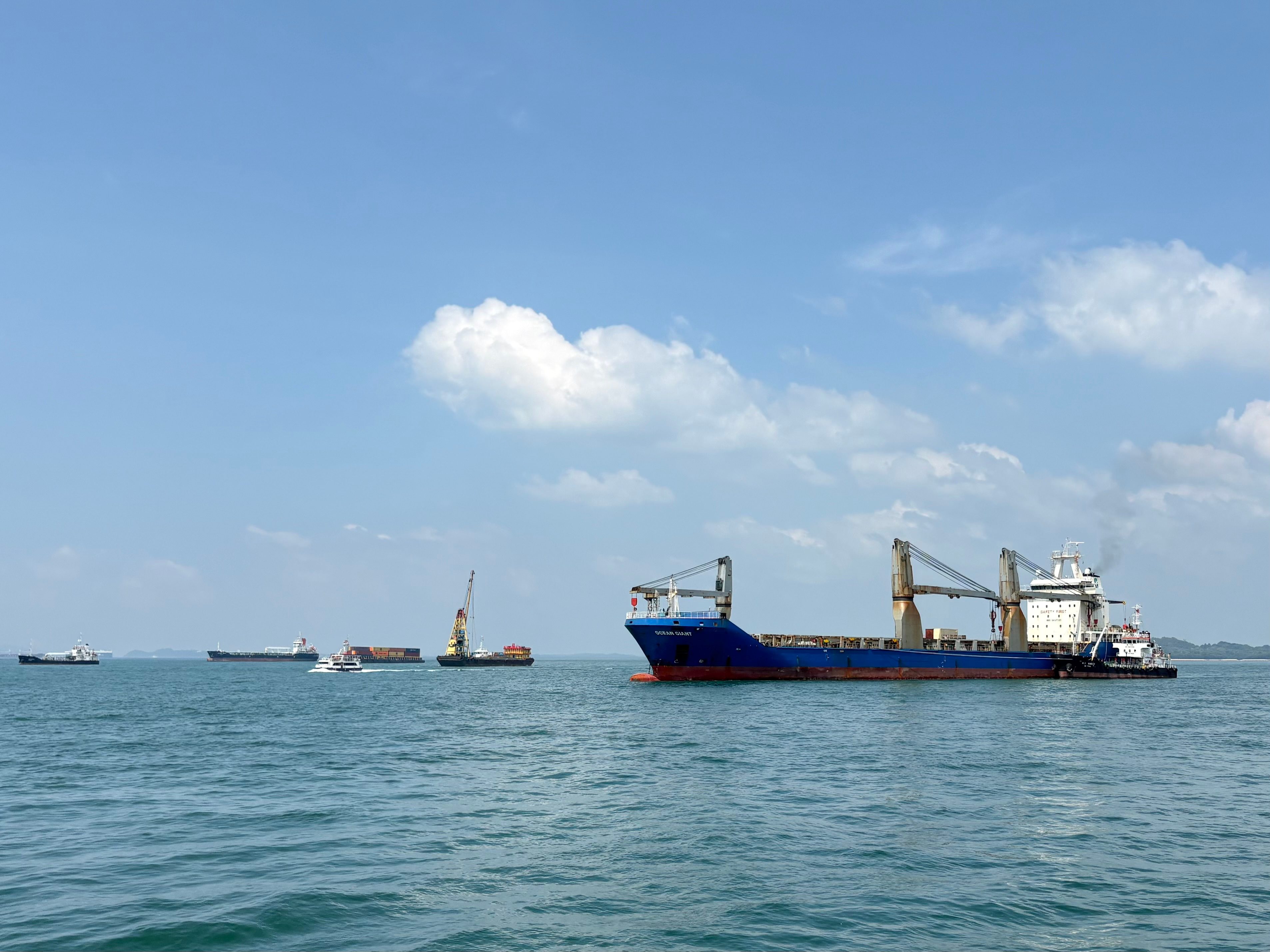
Ships in the Singapore harbour
Golden lessons from banking and high-end retail
During our trip, gold was a key subject in two of our meetings, also from completely different perspectives. For an Indonesian bank, it was a rapidly growing financial product. For a Vietnamese jeweller, it was a scarce and expensive raw material.
The first company was an Islamic bank in Indonesia. The company has an interesting position. Around 87% of Indonesia’s population is Muslim, but Islamic banks still account for only a high-single-digit share of the country’s banking assets. Outside of leveraging this gap, the bank was now focused on gold holding the country’s only bullion banking licence.
Its gold business consists mainly of two products. The first allows customers to buy gold in monthly instalments acting like a savings product. The second allows customers to pawn physical gold in exchange for cash. And the two products respond differently to the economic cycle. When incomes are healthy and gold prices are rising, customers tend to accumulate gold through instalments. When household finances tighten, some customers pledge the gold they already own to access liquidity.
This is particularly relevant in Indonesia, the weak rupiah was a topic of conversation amongst all meetings with Indonesia companies. This uncertainty around purchasing power makes gold attractive as a store of value. At the same time, many consumers still have limited access to traditional financial products. Gold can therefore operate as both savings and collateral, while the mechanics also reduce the bank’s credit risk.
Still, near-zero losses during a rising gold market do not tell us how the business behaves through a full cycle. A significant fall in the gold price would reduce collateral values and probably weaken demand for instalment purchases.
For the dominant branded jeweller in Vietnam the story was different. Gold was not primarily a financial product. It was an input it could not get enough of. On the other hand, its gold resell business had been gaining a larger share from the core business, jewellery, pushing its margins down.
Vietnam’s gold market has been heavily regulated since 2012. Imports were restricted and the state effectively controlled gold bar production. This created a chronic shortage of raw gold and pushed domestic prices to a persistent premium over international prices. At the time of our meeting, the premium was around 15%. Another example of regulatory risks in emerging and frontier markets.
The company therefore sources much of its gold by buying old jewellery back from customers. This circular supply chain has helped keep production running, but it also limits how much the company can manufacture and sell.
High gold prices create another problem. Consumers respond by buying lighter pieces or products with lower gold content. This protects affordability but puts pressure on the jeweller’s sales mix. The low-margin gold trading business can also become a larger part of revenue, while the more profitable jewellery segment grows more slowly.
For one company, gold is an asset that expands its financial ecosystem. For the other, it is an input whose scarcity caps growth. In both cases, the gold price matters. But regulation, currency movements and consumer behaviour may matter even more.
Premium segment, premium resiliency
Premiumization was another recurring theme during our meetings. It also seems to be a key variable around all our core markets. Regardless of how the economy is, the premium segments seem more resilient. This is what we saw in our meetings as well.
A Thai pet food producer we met was a great example of premium economics getting left under the radar. On paper, the company looks like an outsourced manufacturer. However, it does not want to compete by being the cheapest producer. Instead, it focuses on premium products and innovation.
Its global competitiveness does not come from the reasons one could assume, affordable labor. It aims to add value to its customers through innovation, design, and R&D. The reason why over half of its revenue comes from US pet food majors using it as an innovation hub. The resiliency comes from being able to pass through the increase in manufacturing costs and tariffs to its customers, benefits of premiumization.
This distinction matters. A basic manufacturer competes mainly on price. An innovation partner competes on quality, product development and reliability. These relationships also tend to be longer.
The second example came from a Vietnamese conglomerate that owns both the country’s largest grocery retail chain and one of its leading branded food and beverage businesses.
The contrast between the two businesses was interesting. The grocery chain was growing strongly and had recently become profitable after years of losses. Its consumer-brand subsidiary was having a more difficult time. A signal of Vietnams weak consumption trend, a recurring subject with every Vietnamese company.
The difference was visible in the company’s product categories. Mainstream consumption remained soft, whereas the premium segment was the only growth pillar and source of resiliency. Consumers were still willing to pay for trusted brands and perceived quality, even while remaining cautious in their everyday spending.
Premiumization can create resilience, but only when there is a reason for the customer to pay more. For the pet food producer, that reason was innovation. For the Vietnamese consumer company, it was brand trust and perceived quality in selected categories.
Premium does not mean immune. But when purchasing power is under pressure, it can help separate products that consumers value from those they can easily replace.
Digital banking
Digital banking is particularly relevant in emerging markets. It often fills the typical gap of either access to funding or payment frictions. Often, some parts of these emerging economies may seem even more digitized and efficient than developed countries due to the fast adoption of these innovative solutions aiming to fill these gaps.
The first example is digital banking asset buried inside a Philippine telecommunications company. While its traditional telecom operations were growing slowly, the group held an interest in the largest of the country’s six licensed digital banks. It was also the only one generating a positive return on equity in the industry.
A digital bank with an established payment platform and a network of consumers and merchants inside a telco, why? Synergies. A core part of the telco business is payments from customers. The company benefits from the established payment platform, while the digital bank gains access to the telco’s customer base. The digital bank can also leverage data from the massive telco business assessing new clients’ credit.
The second example came from a Vietnamese commercial bank. Here digitalization had a clear story: It was a funding strategy.
For banks, current and savings accounts, or CASA, are the cheapest source of funding. Bank only pays little to no interest on them. The challenge is convincing new customers to keep money in the accounts. Attractive deposit rates can bring customers through the door, but they can leave just as quickly when another bank offers more.
The Vietnamese bank was trying to solve this by placing itself inside services that customers already use. Around 94% of its transactions were conducted through digital channels, while more than 60% of new customers were acquired digitally. The question was how to turn that activity into recurring deposits.
One avenue was an airline loyalty programme. Customers can earn and redeem points across flights, hotels, food and other services. What is the benefit for the company? New customers and cheap deposits. The bank connects this ecosystem through co-branded credit cards, travel insurance and financing for airline tickets. This is more than a traditional loyalty programme. An intelligent way of turning airline miles into CASA.
The same thinking was applied to healthcare and education. The bank had developed digital hospital kiosks and an application that allow patients to pay hospital fees without cash. They used the same recipe in a separate education platform processing around 525,000 tuition payments during the year. By bringing them onto its ecosystem, the bank can capture the payment flow and potentially the deposits sitting around it.
The digital strategy was an interesting way to access new customers, but it also remained a work in progress. CASA was still below the company’s longer-term ambitions. Digital transactions do not automatically become sticky funding, but they certainly are a good channel to reach new customers. CASA is not easy to build. That requires trust, convenience and recurring use of the bank’s services.
The most interesting part of digital banking in the meetings was not the technology itself. It was the ecosystem surrounding it.
The takeway
The trip gave us a broad view of the ASEAN region without producing one simple regional narrative. The macro matters, but it rarely reaches every company in the same way.
The same container can be captive gateway cargo for one port and unreliable transshipment volume for another. The same gold price can expand a bank’s collateral while constraining a jeweller’s production. Premium positioning can protect demand, but only when it is supported by innovation or brand trust. Emerging market regulation can be a tailwind or a constraint but requires careful risk assessment.
That was the thread running through the meetings. A theme may tell us where to start looking, but it does not tell us what to own. The work is understanding where the returns come from, which advantages are structural and which tailwinds may eventually reverse.
References to individual companies are for illustrative purposes and do not constitute investment recommendations.
The contents of this blog should not be considered as investment advice and should not be relied upon in making an investment decision. Before making an investment decision, you should consult the fund's legal documents, such as the fund rules, the key investor document and the fund prospectus. The statutory documents and additional information of the funds are available on the product-specific pages and on www.evli.com/funds.
Historical returns are no guarantee of future returns. The value of an investment may rise and fall, and the investor may lose some or all of the capital invested. The fund’s investment activities are aimed at maximizing the increase in the value of assets. As the fund’s return expectation and risk level are high, we recommend the fund to experienced investors with long investment horizons. All the fund’s assets are invested in emerging economies’ equity markets, which means that the fund’s value may fluctuate abruptly within a short period as a result of the general performance of the target markets and exchange rate fluctuations. More information on risks is available in the fund prospectus.
Alongside the authors, the analysts from the Evli Emerging and Frontier Markets Team also contributed to the writing of this blog.


