
In August our travels took us to Brazil. It's winter there, which of course means 27 to 32 degrees Celsius. We had no complaints. The weather was perfect.
You can't write about Brazil without mentioning football. On a visit to Ibirapuera Park, a green oasis in the middle of urban São Paulo, we couldn't help noticing how many people were playing. Young and old, serious games and casual kickabouts, everyone seemed to have a ball at their feet. The football culture runs deep and it was a joy to watch.
The passion comes at a price, though. The World Cup had just wrapped up when we arrived, and several retailers told us it had hit store traffic harder than any tournament they could remember. With every game streaming, people stayed glued to their screens instead of going shopping, and one company told us betting volumes tripled during the tournament. All this even though Brazil's own performance was a sore disappointment for the locals.
The mood
It's mixed. Many of the companies we met echoed the view that Brazil isn't in a great place right now. Politics are uncertain, fiscal imbalances are looming, and the country has one of the highest real interest rates in the world. High real rates are a killer for valuations and multiples. Inflation is running at a little over four percent while the policy rate has been hovering around 14 percent after a series of small cuts. That leaves a real rate of close to 10 percent, which is one mighty differential. Several companies told us the rates are simply suffocating the economy.
Then again, Brazil has just about everything: a large domestic market, commodities, clean water, energy and plenty more. Almost everyone we spoke to agreed on the long-term potential.
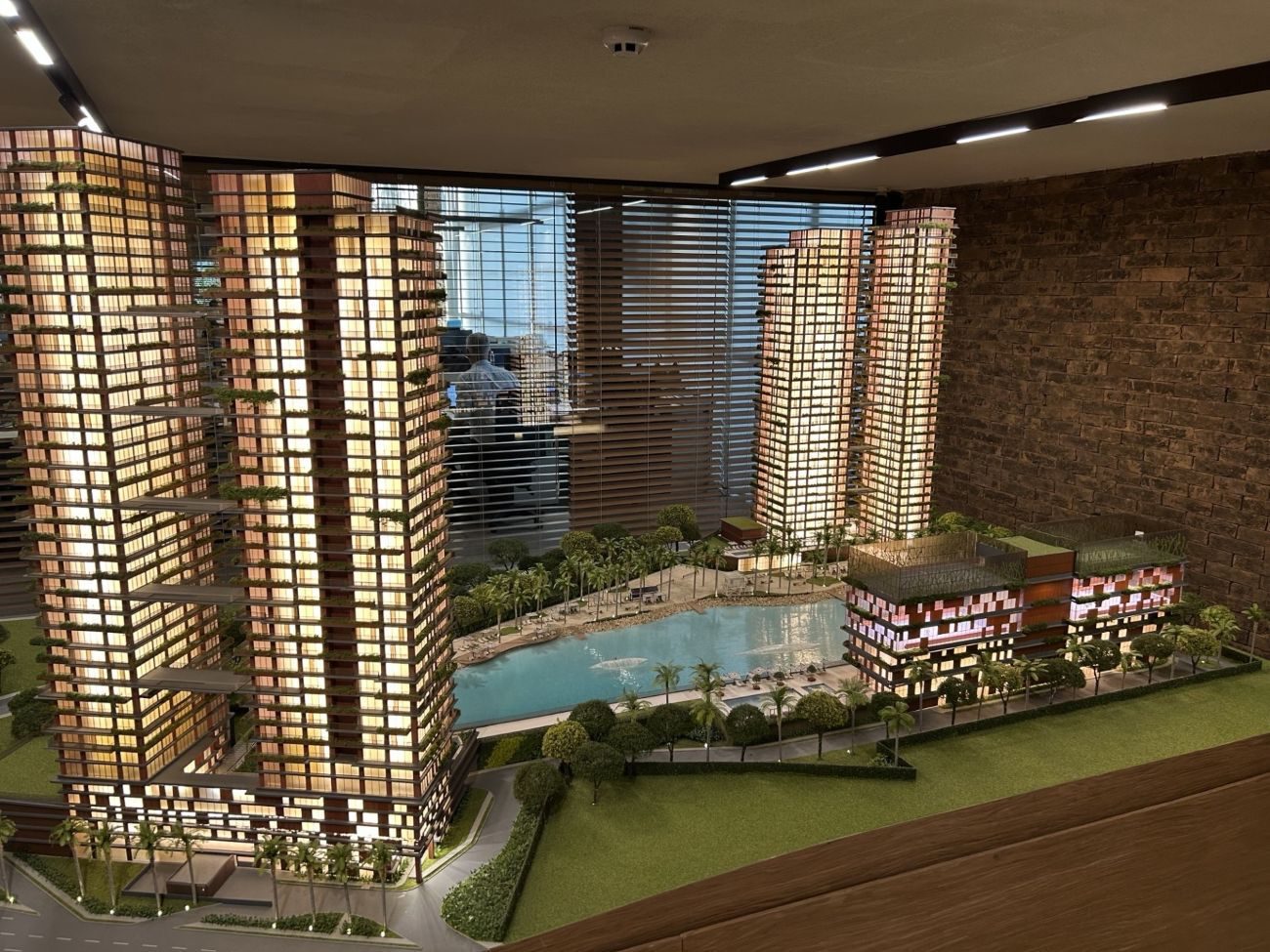
A model of a new property development.
The ballot box
The upcoming presidential election came up often, though most companies weren't too worried it would change much in their operating environment.
The race is a rematch of sorts. Lula, now 80 and chasing a fourth term, is once again up against a Bolsonaro, only this time it's the son. Flávio Bolsonaro is a senator and the son of former president Jair Bolsonaro, who is barred from running and is serving an over 25-year sentence for plotting a coup, so Flávio has picked up the family torch for the right. When we visited, Lula held a comfortable lead both in the polls and in the betting markets. Since then, the race has tightened a lot. At the time of writing, the prediction markets make Flávio the favourite with roughly a 60 percent chance, but the polls still lean slightly towards Lula. We won't have to wait long to find out, as Brazil votes on October 4, 2026, with a likely runoff between the top two candidates on October 25, 2026.
A Finnish connection
We met a lot of fascinating companies. What makes Brazil so rewarding is the sheer variety of businesses across so many sectors. Some meetings even came with surprises for a Finnish visitor. At Blau Farmacêutica, a Brazilian drugmaker, management told us that one of the company's big early partners was the Finnish Red Cross, which used to make plasma products back home. They had been to Helsinki many times in those days. Finland has since closed its own plasma facility and now imports those products from Belgium and the Netherlands. Small world.
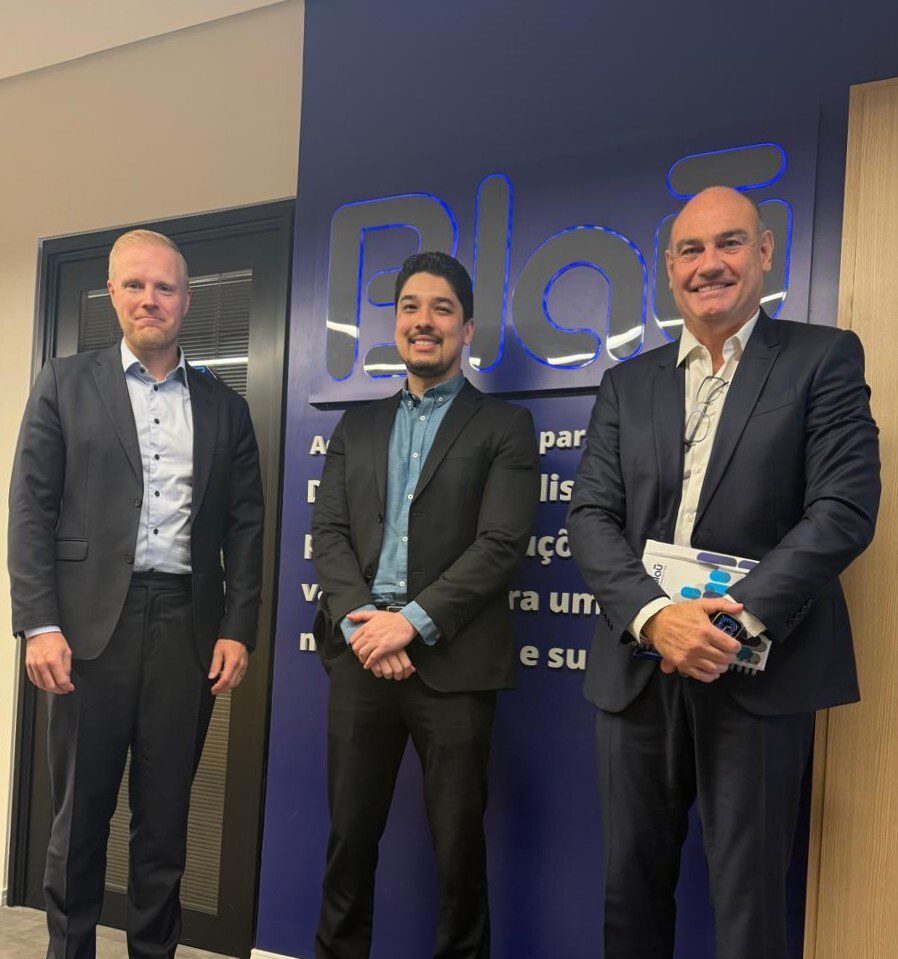
Senior Portfolio Manager Antti Sivonen visiting Blau Farmacêutica.
Brazil's weight-loss boom
Pharmacies were another business that stood out. Brazil is one of the biggest markets in the world for GLP-1 drugs. Around 5.5 percent of the population uses them, well above the global average of 3.7 percent, even though until now they've cost a fortune.
A quick primer for the uninitiated. GLP-1 is a hormone your gut releases after a meal to tell the brain you've had enough. The drugs imitate it, so the "I'm full" message arrives sooner and lingers longer. Semaglutide, sold by Novo Nordisk as Ozempic and Wegovy, copies that one hormone. Tirzepatide, Eli Lilly's Mounjaro, goes a step further and mimics a second gut hormone as well, which tends to mean even more weight loss. If semaglutide is a solo act, tirzepatide is a duet.
Demand has been so strong that many Brazilians have turned to cheaper tirzepatide smuggled in from Paraguay, where a locally made ampoule costs roughly a quarter of what Mounjaro does in Brazil, and injected themselves with who knows what. One pharmacy executive noted the paradox of a population that meticulously studied its COVID-19 vaccine brands but is now willing to inject unvetted pharmaceuticals.
Meanwhile the semaglutide patent expired in Brazil in March 2026 and generics are rolling in, with pens now starting at around a third of Ozempic's price. Tirzepatide is still under patent in Brazil, but with the cheaper semaglutide already on shelves, pharmacies, as the distributors, look well placed to benefit.
The slimming boom seems to be good for gyms too. Smart Fit, Latin America's largest gym chain, counts GLP-1s among the trends pushing more people to work out. We did a bit of field research of our own at one of their gyms in Berrini, one of São Paulo's business districts. We tried to buy a day pass, but the receptionist wouldn't take the money and waved us in as a guest. Hard to argue with that kind of customer service.
Stuck in traffic
Finally, a word on São Paulo's traffic, which lives up to its reputation. Our last meeting was 3.4 km from the hotel. The ride took over an hour and we still ended up walking the last 800 metres. Traffic aside, we came home encouraged. Brazil has its share of problems, but it also has a deep pool of well-run companies that have learned to thrive in some of the toughest conditions anywhere. As one CFO told us, in Brazil you can't be in too much of a hurry, but you can't be too scared either. That sounds like sensible advice for investing there too.
References to individual companies are for illustrative purposes and do not constitute investment recommendations.
The contents of this blog should not be considered as investment advice and should not be relied upon in making an investment decision. Before making an investment decision, you should consult the fund's legal documents, such as the fund rules, the key investor document and the fund prospectus. The statutory documents and additional information of the funds are available on the product-specific pages and on www.evli.com/funds.
Historical returns are no guarantee of future returns. The value of an investment may rise and fall, and the investor may lose some or all of the capital invested. The fund’s investment activities are aimed at maximizing the increase in the value of assets. As the fund’s return expectation and risk level are high, we recommend the fund to experienced investors with long investment horizons. All the fund’s assets are invested in emerging economies’ equity markets, which means that the fund’s value may fluctuate abruptly within a short period as a result of the general performance of the target markets and exchange rate fluctuations. More information on risks is available in the fund prospectus.
Alongside the authors, the analysts from the Evli Emerging and Frontier Markets Team also contributed to the writing of this blog.


