
Spring has been a busy one for the new team behind the Evli Emerging Frontier Fund. We have been where we think we should be: in meetings, on planes, visiting companies, building out our company knowledge hub, and shaping the portfolio around our convictions. The trade-off is that the writing has lagged the travelling.
Rather than archive these field insights, we are presenting them as a five-part summer series detailing our travels. Over the coming weeks, we will publish “Notes from the Road” pieces from the trips, in the same order as they were conducted: Egypt (February 2026), Latin America (in New York, March 2026), the Philippines (March 2026), Thailand (April 2026) and Singapore (July 2026). Once these first notes are out, the plan is simple. When we travel, we write and publish, while the conversations are still fresh.
These notes are not meant to be country textbooks or macro forecasts. They are observations from direct company meetings and from the patterns that emerge when management teams and local operators describe their markets in their own words.
A new narrative for Egypt
In February we visited the busy streets of Cairo to get a better feel of the economic landscape. We found that in Egypt friction can become a moat, a theme we will see in other markets as well.
In Egypt, for much of the recent past, friction has been a part of everyday life: foreign exchange shortages, inflation, import bottlenecks, currency devaluation and repeated pressure on household purchasing power. The main questions for many companies were how to keep shelves stocked, factories running and balance sheets intact. But the tone was changing. Not bullish. Not complacent. But different, more optimistic. The conversations were less about finding dollars at any price and more about planning procurement, pricing, capacity, product launches and funding. That shift matters. When a crisis stops being the daily operating constraint, companies can start making strategic decisions again.
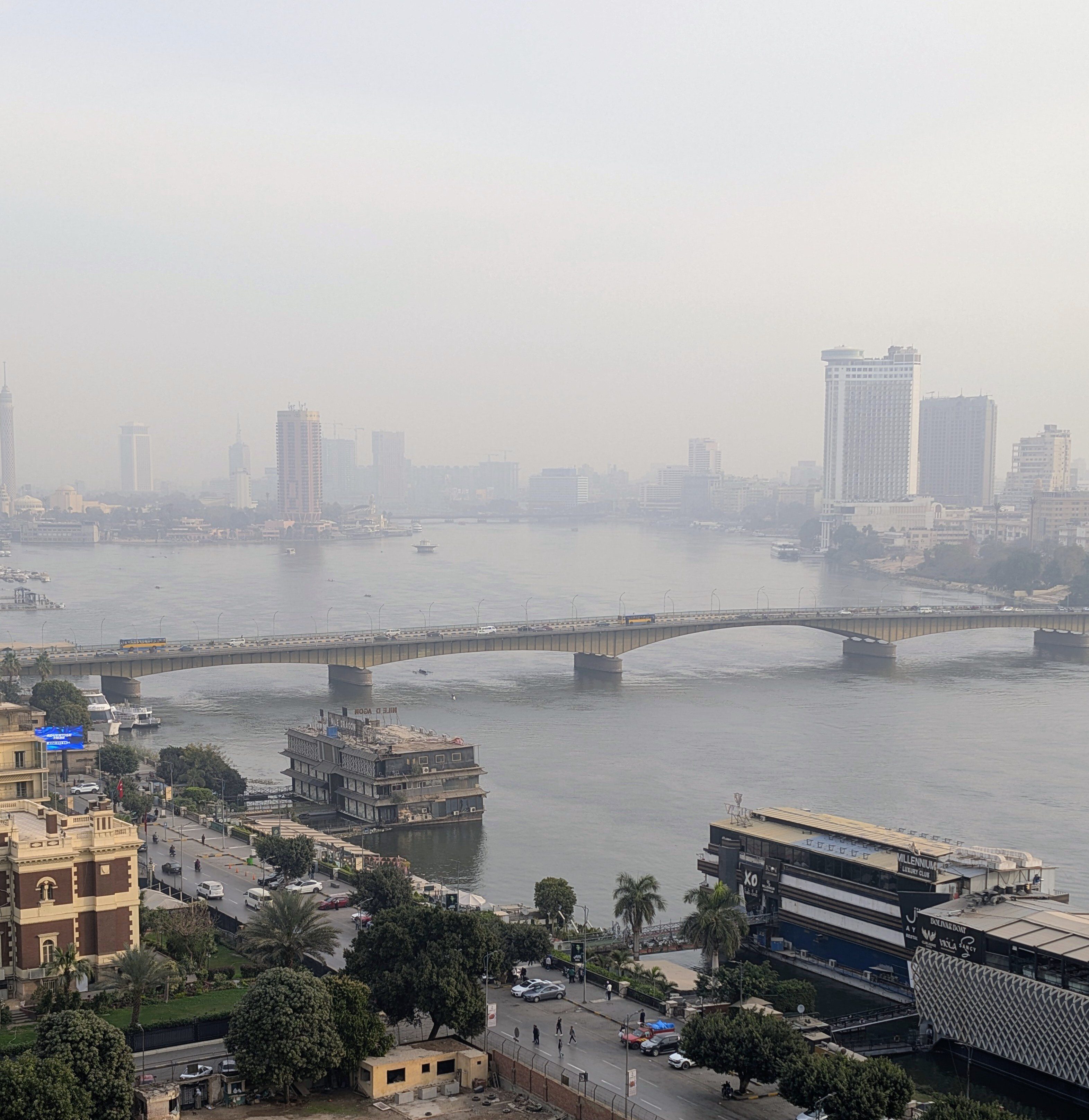
The Nile River in Cairo.
Stabilization is not a magic word. Egypt still has high inflation, high interest rates, a heavy fiscal burden and direct exposure to regional geopolitics, including pressure on Suez Canal revenues from Red Sea disruption. The state’s role in the economy remains large, and the reform process cannot afford to stall. But the market has moved from emergency mode toward normalization. The companies that survived the last few years enter this phase with leaner cost structures, more localized supply chains, better pricing discipline and, in many cases, weaker competitors behind them. Our central takeaway from Egypt is that the crisis acted as a harsh filter. It did not create good businesses, but it revealed them.
From panic to planning
For years, Egypt’s macro debate was dominated by foreign exchange. The shortage of hard currency affected almost everything. Importers waited. Manufacturers rationed inputs.
Companies with dollar revenues had an advantage. Companies without access to dollars were forced to improvise. The move to a more flexible exchange-rate regime changed the conversation. The black market premium narrowed, the interbank market began to function again, and foreign currency became available through channels companies could plan around. That does not remove inflation. It does not make imported inputs cheap. But it changes the nature of the problem. A scarce input that is expensive is painful. A scarce input that may not be available at all is paralyzing. This was one of the clearest differences in our meetings. Management teams still talk about prices, wages, working capital and consumer pressure, but they are no longer building every plan around emergency access to foreign currency.
That is an investable shift. It turns the market from a crisis trade into a company-selection market.
Making room for the private sector
At the sovereign level, Egypt’s policy direction is easy to state and harder to execute: reduce the state’s economic footprint, slow the old model of state-led mega-projects, and make room for private-sector-led growth.
Egypt doesn’t lack scale. It has a large population, a young labor force, a sizeable domestic market and one of the most important geographic positions in global trade. What it has often lacked is a level and stable playing field.
Private companies can compete with volatility. They struggle more when competition, access to land, capital allocation and regulation are shaped by the state in ways that are not always transparent.
The companies we met are not waiting for a perfect reform process. They are adapting to what has already changed. Import procedures are being simplified. Customs clearance times are being targeted for improvement. Digital tax systems and e-invoicing are making more of the economy visible.
In practical terms, that means less time lost to paperwork, fewer informal leakages and better data for financing decisions.
The important point is not that bureaucracy has disappeared. It has not. The point is that even small reductions in friction can have large effects in a market where companies have spent years carrying the cost of inefficiency.
Consumers: the wallet is healing, but slowly
Consumer companies in Egypt have had to perform a difficult balancing act.
Costs rose quickly. Consumers could not absorb every price increase. Volumes mattered, but margins mattered too. In one of our meetings, management at a leading dairy and juice manufacturer described the recovery in purchasing power as gradual rather than dramatic. That felt like the right tone. Consumers are not suddenly comfortable because inflation is falling. But if wage growth catches up and the currency stabilizes, households can start to behave less defensively. That creates room for product launches, more normal promotions and better visibility on volumes.
The best consumer companies are not relying on a simple rebound. They are changing the mix. They are resizing packages, pushing into categories where brand loyalty is stronger, expanding distribution, and using new products to protect price points.
In a market like Egypt, small packaging decisions can matter as much as big picture strategy. The question is not only whether the consumer can afford the product. It is whether the company can keep the product inside the consumer’s daily routine.
We saw a similar pattern in packaged foods. One cheese producer we met said it had avoided the worst of the margin pressure by adding processing capacity and staying disciplined on discounts, even when competitors were chasing volume. In a normal market, that might sound unremarkable. In Egypt, where inflation and input availability have forced many companies into short-term decisions, discipline is a competitive advantage.
Rameda Pharma: regulated prices, unregulated creativity
Pharmaceuticals are one of the clearest examples of why local knowledge matters in Egypt.
End-consumer prices for many medicines are regulated, which means companies cannot simply pass through every input-cost shock. When the currency falls and imported raw materials become more expensive, margins can be squeezed hard. For weaker manufacturers, that can be a serious problem. For stronger ones, it becomes a reason to rethink the portfolio.
Rameda Pharma is a good example. The company has been shifting its mix toward chronic medications and over-the-counter products, where demand is more recurring and margins are more attractive. Chronic disease categories are particularly important in a market with Egypt’s demographics and health burden. They also create a steadier relationship with pharmacies, doctors and patients.
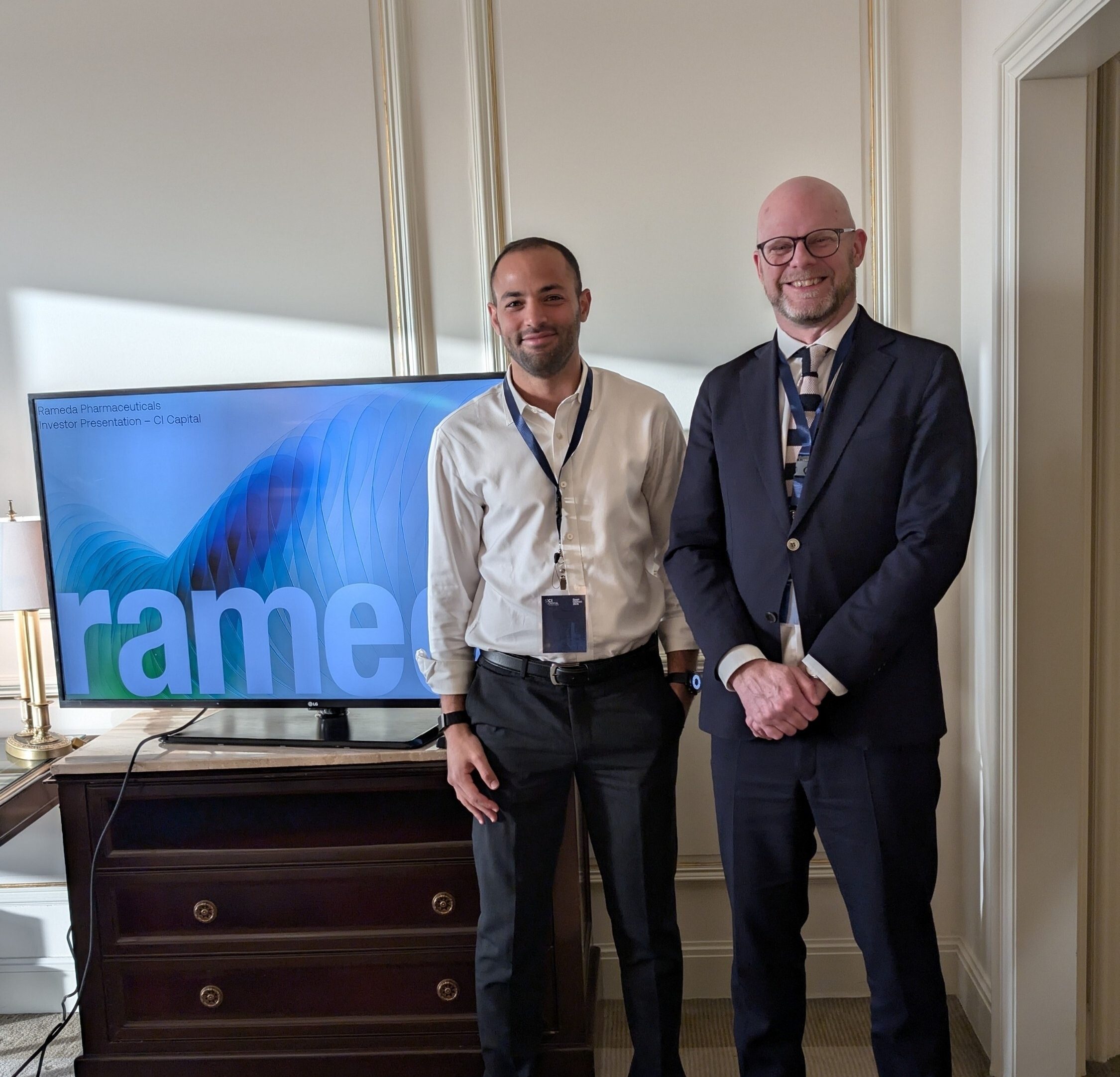
Senior Portfolio Manager Mathias Althoff (on the right) at the Rameda management meeting.
The other interesting opportunity is toll manufacturing. Global pharmaceutical companies want access to the Egyptian market, but they do not always want to carry the full operational complexity of local production. Local manufacturers with excess factory capacity can produce on their behalf, earning attractive revenues while the multinational often carries more of the raw-material cost risk.
That is a very different business from simply selling low-margin regulated products into a volatile currency environment.
Again, the theme is the same. The crisis did not make the company good. It forced the company to find where its real advantages were.
Fawry: inclusion becomes infrastructure
Egypt’s digital story is not just about apps. It is about bringing a large, cash-heavy economy into systems where transactions can be seen, scored and financed.
That is why Fawry is such an important company to understand. It began from a simple but powerful position: building payment rails in a market where cash was dominant and formal financial access was limited. Over time, that network becomes more than a payment channel. It becomes distribution, data and trust.
The runway is large. Household leverage remains low, cash usage is still significant and many consumers and small businesses have historically sat outside the formal credit system. That creates obvious risk, but it also creates opportunity. In markets where traditional credit bureaus have limited data, the company with the best proprietary transaction data can have a real edge.
The interesting part is not simply that Fawry uses data. Everyone says they use data. The more important point is that transaction history, repayment behavior and merchant relationships can support broader financial services if growth is managed carefully.
In emerging markets, the first wave of financial inclusion often looks exciting until the first credit cycle arrives. The good operators know that growth is only valuable if collections hold.
Several Egyptian fintech players are also looking beyond Egypt. Expansion into Gulf markets, especially Saudi Arabia, came up repeatedly in our discussions. In our view, that says something about the quality of the technology and the management teams. Egypt is not only importing digital models. In some areas, it is exporting them.
eFinance: the state as a data platform
The public-sector digitization story may be just as important as consumer fintech.
eFinance, with its government IT contracts and role in Egypt’s digital infrastructure, sits at the center of this theme. E-invoicing, digital tax receipts and electronic government payments may not sound glamorous, but they can be very powerful.
When the state can see more transactions, tax collection improves. When banks can see more reliable revenue data, financing small and medium-sized businesses becomes less guesswork and more underwriting.
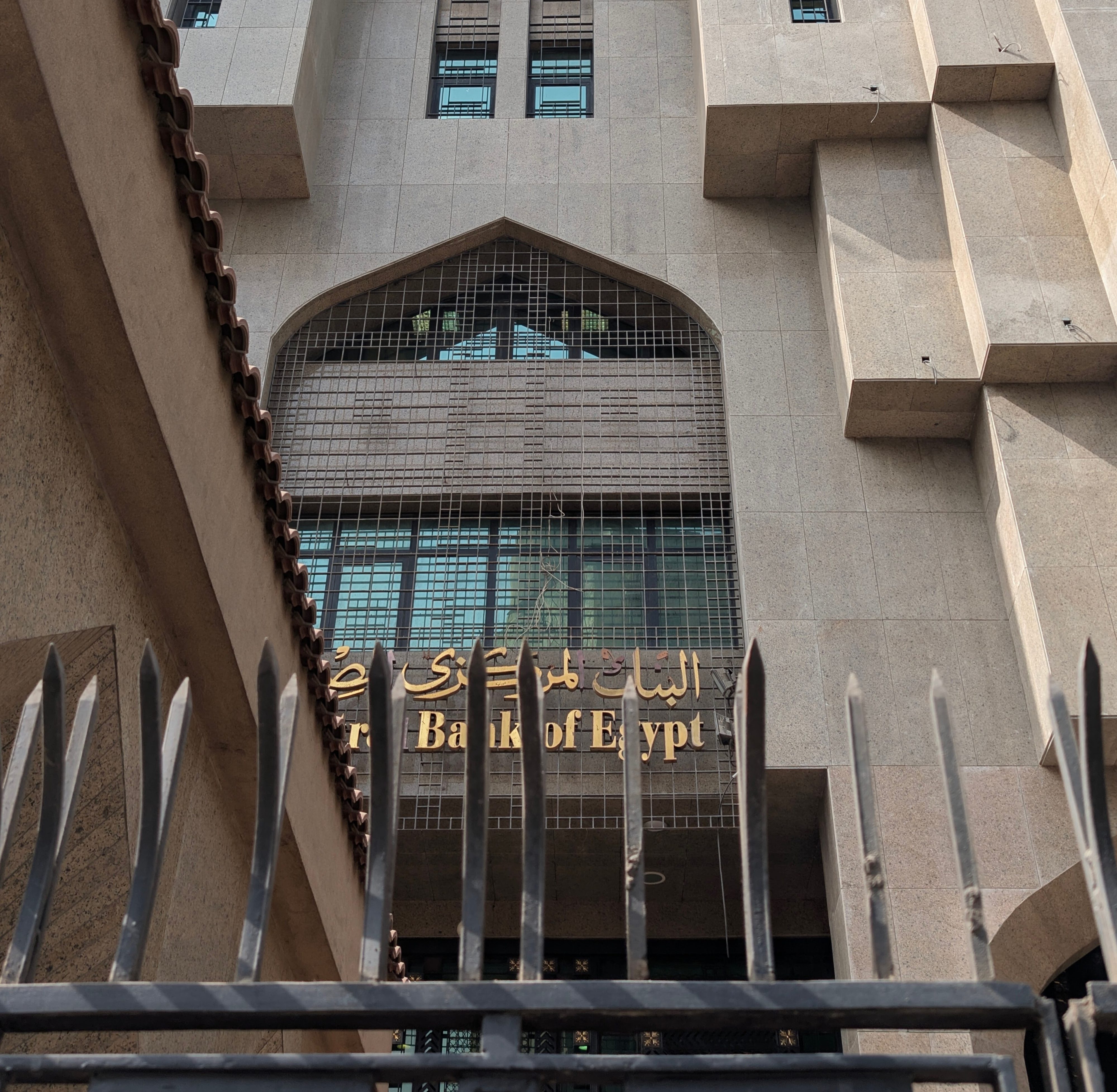
A view of the Central Bank of Egypt.
That creates an interesting bridge between government reform and private credit growth. A digital tax receipt is not just a compliance tool. It can become the beginning of a credit file. For a small business that has never had meaningful access to formal finance, that’s transformative.
This is one of the more underappreciated parts of the Egypt story. Formalization is often discussed as a burden on companies, and sometimes it is. But if formalization comes with better access to credit, better procurement visibility and lower transaction friction, it can also become a growth tool.
Banks and Orascom Development: preparing for the next cycle
The banks are preparing for a different phase of the cycle.
High rates have supported margins, but if inflation continues to fall, the direction of travel should eventually be lower rates. That will put pressure on net interest margins. The better banks know this and are already trying to compensate through volume growth, fees, low-cost deposits and deeper relationships with small and medium-sized businesses.
This is where financial inclusion again becomes practical. Bringing cash flows into the formal system helps the tax authority, but it also helps banks. A company that was previously invisible cannot be lent to safely. A company with digital receipts, transaction history and bankable cash flows can become a customer.
Real estate, meanwhile, remains a familiar Egyptian hedge against inflation, but the better developers are trying to become more than land banks and apartment sellers.
Orascom Development is a useful example. The company is not simply selling units. It is building integrated destinations, where residential sales sit alongside hospitality, commercial assets, town management and other recurring revenue streams. That matters because, in a volatile macro environment, one-off sales can look impressive, but recurring revenues make the business more durable.
Foreign-currency demand also matters. Developers with hard-currency buyers or diaspora demand are better protected from local currency shocks. The risk is that real estate can become a pressure valve for savings during inflationary periods, rather than a simple reflection of end-user affordability.
That makes stock selection important. The question is not whether Egyptians like property. They do. The question is which developers can convert that demand into cash flows without taking on balance-sheet risk they cannot control.
The risks are still real
It would be too easy to end the note with a simple stabilization story. Egypt is more complicated than that.
Inflation is lower than at the peak, but still high. Rates remain restrictive. The fiscal burden is heavy. The divestment agenda has moved more slowly than investors would like. Regional geopolitics remains a direct economic risk, not an abstract one. Disruption in the Red Sea has hit Suez Canal revenues, one of Egypt’s key sources of hard currency. These points are central to any investment case in the country.
Egypt’s improvement depends on maintaining exchange-rate flexibility, keeping fiscal policy disciplined, making real progress on private-sector reform and avoiding another round of external shocks. None of that is guaranteed.
But the market does not need perfection to become interesting. It needs direction, liquidity, and operators that can turn a better macro backdrop into better earnings.
The takeaway
Egypt today is not a story of everything being fixed. It is a story of the question changing.
During the crisis, the question was survival. Who could find dollars? Who could keep inventory moving? Who could protect working capital? Who could avoid being forced into bad decisions at the worst moment?
Now the question is more constructive. Who can grow when the system starts to function? Who has pricing power without losing the consumer? Who has local manufacturing capacity when import dependence remains a risk? Who has the data to lend responsibly to an underbanked population? Who can benefit if the state really does make more room for private capital?

A view of the city of Cairo from the sky.
The companies that came through the crisis intact did so for a reason. They localized supply chains, changed product mixes, invested in digital systems, protected balance sheets and learned to operate in conditions that would have broken weaker competitors.
That is what makes Egypt interesting. The macro stabilization is the headline, but the company stories are the work. For investors in emerging and frontier markets, the opportunity is not to pretend the risks have disappeared. It is to identify the operators that used the crisis to get stronger, and that now have a chance to compound as the environment becomes less hostile.
At the time of writing, the Evli Emerging Frontier Fund holds shares in Orascom Development, Rameda Pharma and Fawry. The fund did not hold shares in Rameda Pharma or Fawry at the time of the Egypt trip; both were added afterwards. References to individual companies are for illustrative purposes and do not constitute investment recommendations.
The contents of this blog should not be considered as investment advice and should not be relied upon in making an investment decision. Before making an investment decision, you should consult the fund's legal documents, such as the fund rules, the key investor document and the fund prospectus. The statutory documents and additional information of the funds are available on the product-specific pages and on www.evli.com/funds.
Historical returns are no guarantee of future returns. The value of an investment may rise and fall, and the investor may lose some or all of the capital invested. The fund’s investment activities are aimed at maximizing the increase in the value of assets. As the fund’s return expectation and risk level are high, we recommend the fund to experienced investors with long investment horizons. All the fund’s assets are invested in emerging economies’ equity markets, which means that the fund’s value may fluctuate abruptly within a short period as a result of the general performance of the target markets and exchange rate fluctuations. More information on risks is available in the fund prospectus.
Alongside the authors, the analysts from the Evli Emerging and Frontier Markets Team also contributed to the writing of this blog.


