
We have spent recent months on planes, in boardrooms, and on the ground—which means our field notes lagged our travel schedule. To catch up, we are sharing a five-part series of fresh, unfiltered observations directly from our company meetings, skipping the textbook macro forecasts to focus on ground-level operational realities.
Catch up on the series: Part 1 – Egypt
From here on out, our rule is simple: we travel, we meet management, and we publish while the insights are still fresh.
Friction is the starting point
Our second trip took us to New York in early March, where a concentrated set of meetings with Latin American management teams gave us a practical way to cover a lot of ground quickly. Conferences are not a substitute for visiting the companies in their home turf, but used the right way, they are a very efficient complement. This one let us compare how operators in Brazil, Chile, Peru, Colombia and Mexico are thinking about the same questions: growth, inflation, politics, capital allocation and the value of local knowledge.

A view of New York by night.
What stayed with us was a simple thought. In Latin America, the complexity is not always just a cost. For the right operators, it can be the moat. In and around the meetings, bigger frictions dominated the conversation: geopolitics, energy security, supply chains and the increasingly permanent use of tariffs as an industrial policy tool. As you know, the old idea that geopolitics sits in the background while companies get on with business is increasingly outdated. It is now part of the investment landscape.
Still, we did not cross the Atlantic to produce another macro risk checklist. We wanted to understand how companies themselves are living with complexity, and whether that complexity is hurting them or helping them. The answer, in many cases, was more interesting than the usual list of Latin American risks. The conventional view treats the region's complexity as a tax on returns. We think that is only half the picture. For the right domestic operators, complexity is a barrier to entry that compounds over time. Friction, in other words, can become the moat.
Brazil: where complexity pays a dividend
Brazil stood out as a market where complexity itself can become a competitive advantage. While foreign companies often see an obstacle course of taxes, regulations and logistics challenges, experienced local operators have spent decades learning how to navigate the system.
This was particularly evident in our discussions with Assaí, the Brazilian cash-and-carry retailer. Although the company's model appears straightforward, operating successfully in Brazil requires deep expertise in tax structures, fiscal incentives and supply-chain management. These complexities create advantages that are difficult for international competitors to replicate. Local incumbents have spent decades learning how to navigate the system, from managing tax exemptions and interstate transfers to identifying hidden sources of inefficiency. As one executive memorably summed up the operating environment: "They say the only certainties in life are death and taxes. But here, if you die, you still have to ask permission, and it takes three years."
That is the moat.
The other side of Brazil's investment story is the cost of capital. Brazil's high interest rates continue to shape valuations, capital allocation and growth prospects, helping explain why many Brazilian assets appear inexpensive. Good businesses exist, but elevated financing costs raise the hurdle for generating attractive returns. We saw this across sectors, from infrastructure operators benefiting from long-term investment opportunities to Direcional, one of our portfolio holdings, which is performing well operationally in affordable housing through the Minha Casa, Minha Vida programme, under which lower and middle-income households receive subsidised financing.
The Andes: steadier ground, mixed fortunes
If Brazil was a lesson in how complexity can become competitive advantage, the Andean region offered a different case study: markets where the macro framework is steadier, but outcomes still diverge sharply by country and company. Across Chile, Peru and Colombia, we found distinct stories unfolding at both the country and company level.
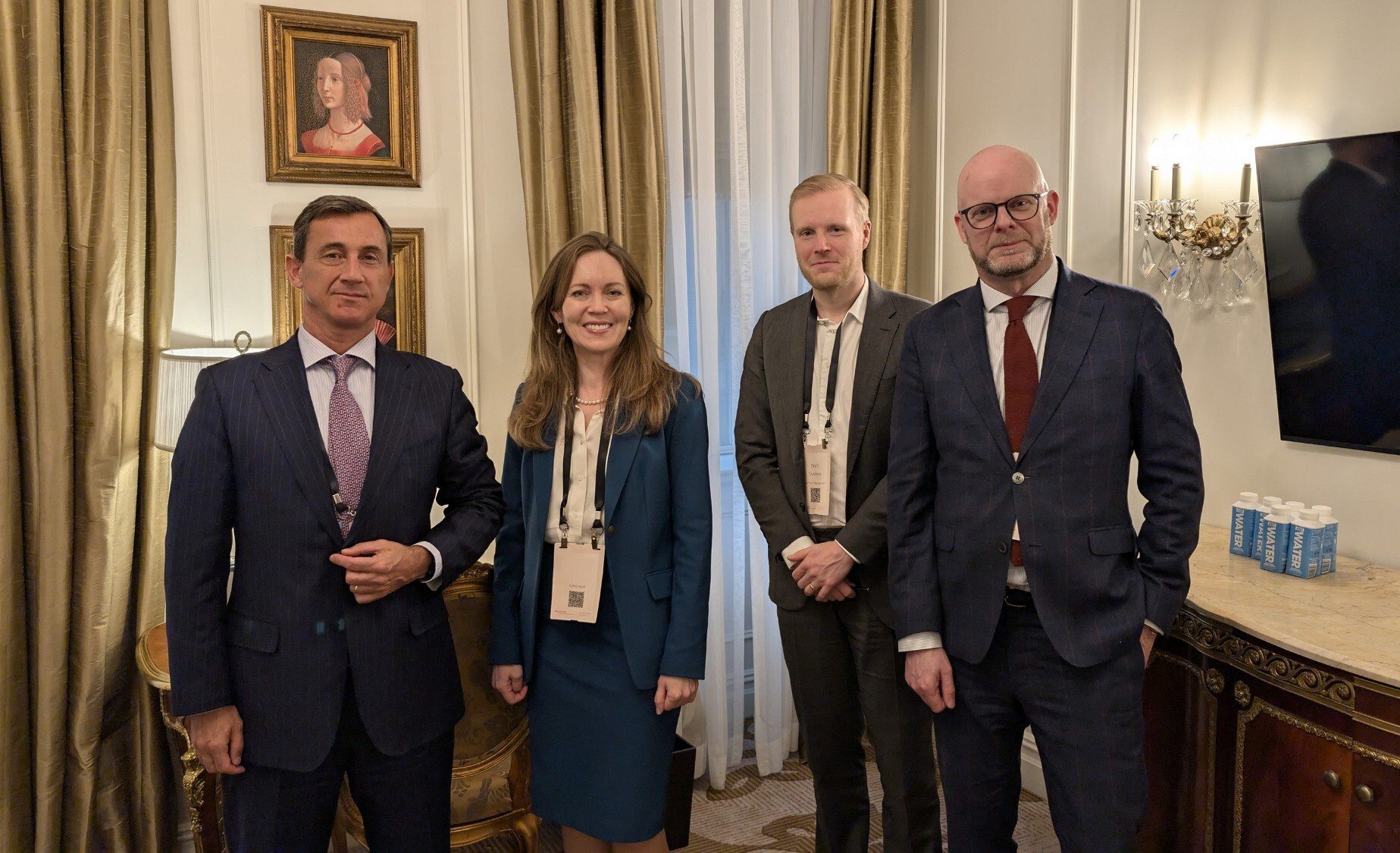
Senior Portfolio Managers Antti Sivonen and Mathias Althoff (on the right) at a management meeting with Cencosud.
Chile felt the most mature, with improving business confidence and a relatively stable institutional backdrop. The more interesting theme, however, was corporate self-help. Several companies are discovering value in assets and capabilities that had long been underutilised. One retailer operating across six countries is using customer data more effectively to improve cross-selling, personalise promotions and develop new revenue streams, while another has shifted away from an ambitious e-commerce strategy and refocused on its core strengths. Interestingly, the latter's digital banking arm has quietly become Chile's largest credit card issuer, a reminder that some of the most valuable businesses are not always what the market sees first.
Peru emerged as the region's macroeconomic bright spot, supported by stronger trade dynamics, controlled inflation and a more constructive political backdrop than in recent years. We saw this reflected in our discussions with Auna, the healthcare operator with a strong position in Peru and a growing presence in Mexico. Management described Peru as the group's cash cow: the most developed market, the highest margins and the operational anchor of the business, while Mexico remains its potential growth engine.
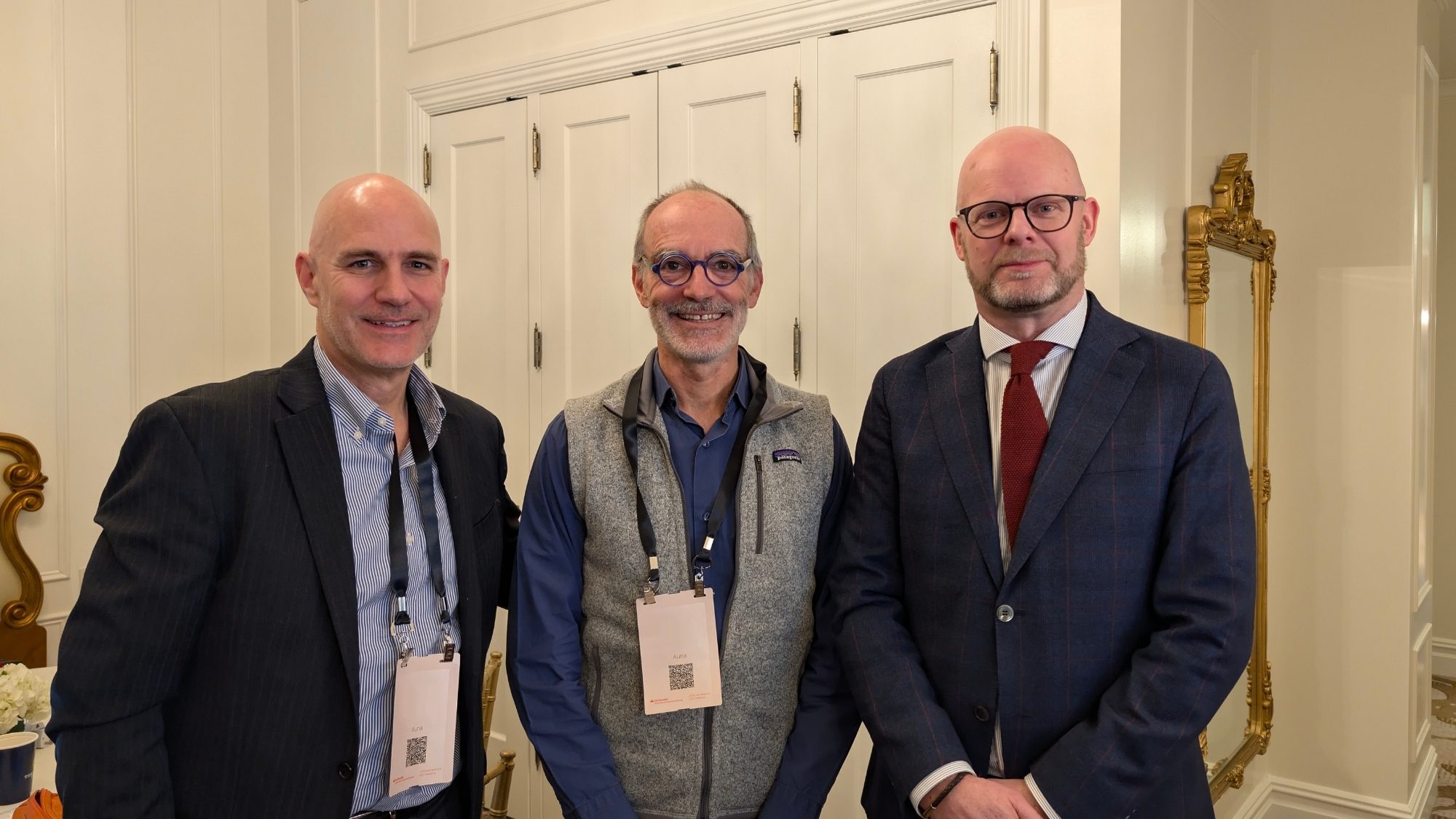
Senior Portfolio Manager Mathias Althoff (on the right) at the Auna management meeting.
Colombia, meanwhile, offered a more sobering picture. Fiscal concerns, inflation pressures and political uncertainty continue to influence investor sentiment and corporate confidence. In some markets, the company story can dominate the macro story. In Colombia, for now, the macro story remains difficult to ignore.
Mexico: after the review, uncertainty still matters
Mexico was where macroeconomics and politics came together most clearly. By the time this note is published, the first formal USMCA review will likely have taken place. That does not make it irrelevant. The key issue for investors is not the date itself, but what kind of trade regime companies are now planning around.
USMCA, the trade agreement between the US, Mexico and Canada that replaced NAFTA, the North American Free Trade Agreement, sets the rules for tariffs, supply chains and investment across North America. The agreement does not simply disappear if it is not extended, but the visibility companies rely on when making long-term investment decisions can become weaker. For Mexican businesses tied to North American supply chains, the question is whether they are operating under a stable rules-based framework or one in which trade rules are repeatedly put back on the table.
Mexico enters this period from a stronger position than many assume. A growing share of its exports already complies with USMCA rules, tariff access to the US remains highly favourable, and Mexico's share of US manufacturing imports has continued to rise. The nearshoring story is not frictionless, but neither is it imaginary.
At the company level, Alsea, the Mexican restaurant franchise operator, offered an interesting view of changing consumer dynamics. Rising minimum wages have expanded the customer base, particularly in full-service dining, helping Mexico become the highest-margin market in the company's portfolio. Management is also becoming more disciplined by focusing on stronger brands and prioritising renovations over aggressive expansion. Here, too, the friction-as-moat point applies. A franchise operator that has spent years learning Mexican supplier networks, real estate cycles and labour rules is hard to displace, however large the would-be competitor.
The takeaway
What stayed with us after New York was not that Latin American risk is misunderstood in every case. The risks are real. Cost of capital matters. Politics matters. Fiscal discipline matters. Currency volatility matters. Not every business survives a regime change.
But the default outsider lens is often incomplete. It sees friction and stops there. The better local operators see friction, price it, route around it and, over time, turn it into a competitive advantage.
That is why direct company work makes a difference. It is easy to screen Latin America and see only volatility, low multiples and political noise. It is harder, and more useful, to sit with management teams and ask which volatility is cyclical noise, which is a structural cost, and which is a barrier that keeps weaker competitors out.
For investors in emerging and frontier markets, some of the best opportunities often sit precisely where outsiders are least eager to look. In Latin America, complexity is not always the reason to stay away. In the right hands, it may be the reason a business keeps winning.
That is the thread we will carry into the next notes from the Philippines, Thailand, and Singapore. The markets differ, but the question is the same: who is using complexity to get stronger?
At the time of writing, the Evli Emerging Frontier Fund holds shares in Direcional. References to individual companies are for illustrative purposes and do not constitute investment recommendations.
The contents of this blog should not be considered as investment advice and should not be relied upon in making an investment decision. Before making an investment decision, you should consult the fund's legal documents, such as the fund rules, the key investor document and the fund prospectus. The statutory documents and additional information of the funds are available on the product-specific pages and on www.evli.com/funds.
Historical returns are no guarantee of future returns. The value of an investment may rise and fall, and the investor may lose some or all of the capital invested. The fund’s investment activities are aimed at maximizing the increase in the value of assets. As the fund’s return expectation and risk level are high, we recommend the fund to experienced investors with long investment horizons. All the fund’s assets are invested in emerging economies’ equity markets, which means that the fund’s value may fluctuate abruptly within a short period as a result of the general performance of the target markets and exchange rate fluctuations. More information on risks is available in the fund prospectus.
Alongside the authors, the analysts from the Evli Emerging and Frontier Markets Team also contributed to the writing of this blog.


