
We have spent recent months on planes, in boardrooms, and on the ground—which means our field notes lagged our travel schedule. To catch up, we’re sharing a five-part series of fresh, unfiltered observations directly from our company meetings, skipping the textbook macro forecasts to focus on ground-level operational realities.
Catch up on the series: Part 1 – Egypt | Part 2 – Latin America, from New York
From here on out, our rule is simple: we travel, we meet management, and we publish while the insights are still fresh.
In the Philippines, a robust consumption-driven economy faces a disconnect between depressed market valuations and solid operational fundamentals, creating unique opportunities for agile market leaders. Growth remains anemic, however.
The third stop in our summer series takes us to the Philippines, where we went in March 2026.
In Latin America, our central theme was that friction can become a moat. In Egypt, crisis had acted as a filter. In the Philippines, the idea was different again: this was a market where the stock prices seemed to be telling one story, while the companies were often telling another.
The macro backdrop is far from perfect. The country is exposed to imported oil and food prices, inflation has been painful for consumers, and slower public infrastructure spending has weighed on growth. In its May 2026 update, the Bangko Sentral ng Pilipinas (BSP) noted that Q1 growth had slowed, but also that household consumption, services, exports and government spending were still positive contributors. That is a useful summary of the country itself: challenged for sure, but far from broken.
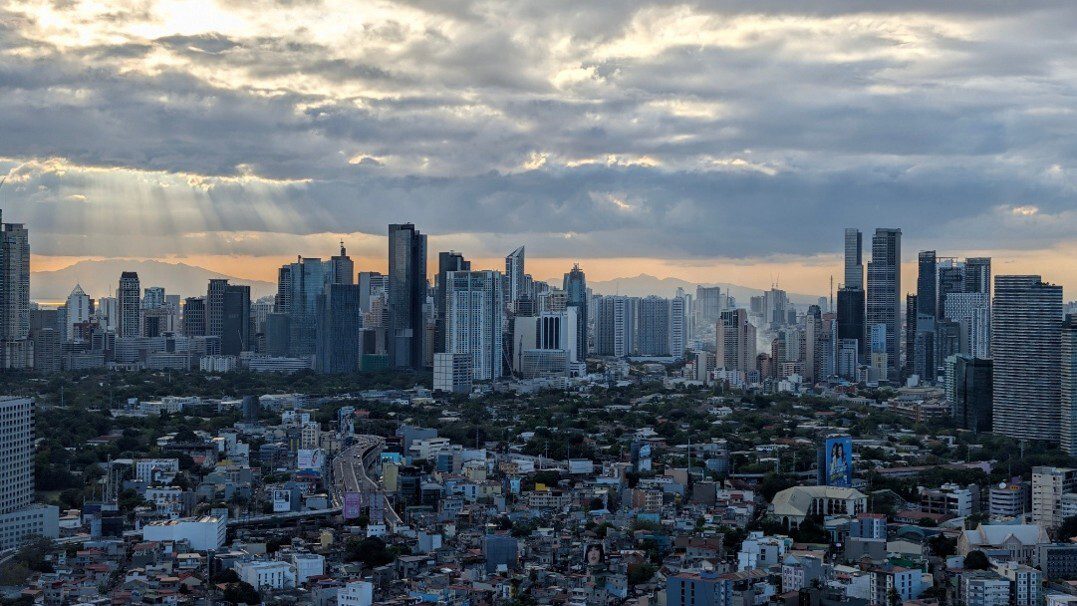
A view of the Manila skyline.
What stood out in our meetings was the gap between depressed market valuations and solid operating fundamentals. Several high-quality companies with clean balance sheets are trading at levels that imply very little confidence in the future. Management teams did not describe a demand collapse or a banking crisis. They described a market suffering from low liquidity, weak foreign flows and valuation fatigue. A broken company and a neglected stock are not the same thing.
The Philippines we saw is still a consumption-led economy supported by two powerful structural flows: overseas worker remittances and business process outsourcing. Remittances remain a major stabiliser for household income. BSP data show overseas Filipino cash remittances of about USD 35.6 billion in 2025, with January to April 2026 also ahead of the same period in 2025.
The question for investors is whether the market is confusing macro discomfort with corporate impairment. In many cases, we think it is.
A consumer economy under pressure, not in retreat
The Philippine consumer has been squeezed. Higher food, fuel and utility costs have forced households to be more selective. That has created a clear down-trading pattern, with consumers shifting toward cheaper brands, smaller pack sizes, bulk formats and promotions. In many markets, that kind of behaviour is treated as a warning sign. In the Philippines, it is better understood as adaptation.
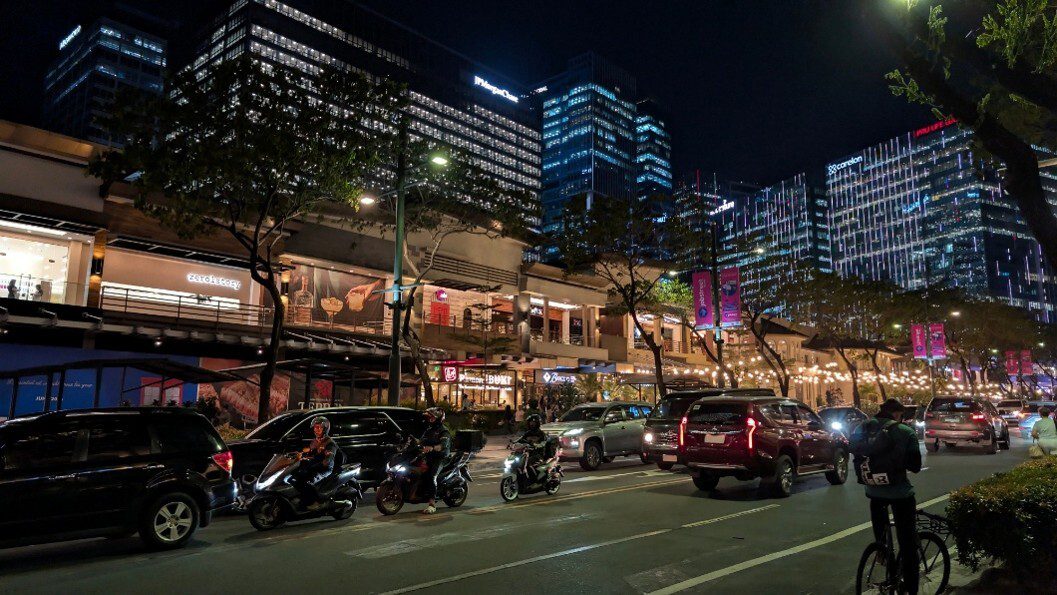
A view of Manila by night.
Consumption has not disappeared, but it has become more price sensitive. Strong operators are not simply waiting for the consumer to recover. They are changing the offer. Retailers are expanding private-label products. Food manufacturers are, again, resizing packages. Convenience and grocery chains are sharpening price points. The better companies are trying to keep their products inside the consumer’s daily routine, even when wallets are tight.
That sounds simple, but it is where local execution makes a difference. A consumer under pressure does not stop buying shampoo, snacks, coffee or basic groceries. But they may change brand, channel, pack size or frequency. Companies that understand those shifts early can protect volumes without giving away the margin structure.
One of the clearest examples was retail. The rise of hard-discount chains has forced established modern retailers to rethink the value proposition. The response has not been a destructive price war. Instead, the better operators are accelerating private-label offerings, where consumers can save money while retailers capture higher margins than they would on third-party national brands.
That is a good example of the broader Philippine story. Pressure is real, but it is also forcing useful self-help.
The market problem is liquidity, not earnings alone
The local equity market has been difficult for years. Foreign investors remain underweight, liquidity is thin, and even companies with stable cash flows often trade at large discounts to their net asset values. While frustrating for management teams, this can create opportunities for long-term investors.
Many companies are responding rationally. Rather than waiting for foreign flows to return, they are buying back shares, selling non-core assets, improving working capital and shifting business models toward recurring revenues. When management teams believe their stock is undervalued and act like owners, low valuations can become a capital allocation opportunity.
The risk, of course, is that cheap stocks can stay cheap. Valuation gaps in the Philippines do not always close quickly. But for companies with strong balance sheets, solid cash generation and the ability to keep compounding while the market looks elsewhere, patience can be rewarded.

Senior Portfolio Manager Mathias Althoff (on the left) at a management meeting with D&L.
Banks: the consumer-lending runway
The Philippine banking sector is undergoing a quiet but important shift. While corporate lending remains a solid business, the more compelling opportunity lies in consumer finance. Household leverage remains low by regional standards, and large parts of the population are still underbanked or only lightly served by traditional financial institutions.
That creates a long runway, but also a credit-risk trap. Every emerging market consumer-lending story looks attractive at the beginning. The real test comes later, when loan books mature and the first weak cycle arrives.
The banks we met understand this challenge. They are investing heavily in digital infrastructure, not simply because it sounds modern, but because it lowers the cost of serving customers who would be uneconomic through a traditional branch model. Better data also improves underwriting, pricing and collections. The goal is not only to lend more, but to do it more intelligently. The same logic applies to fintech.
Fintech: from wallet to bank
The Philippine fintech ecosystem has moved well beyond the early payment-wallet stage. What began as a solution for remittances, transfers and small payments is evolving into broader financial ecosystems, with leading platforms leveraging transaction data and credit models to gain visibility into financial behaviour that many traditional banks lack.
This matters in a country where many consumers do not have extensive formal credit histories. Salary accounts, remittance patterns and mobile transaction records can provide the basis for underwriting.
The key question is whether companies can grow high-margin micro-loans while keeping non-performing loans under control. Financial inclusion is only attractive if the credit cycle is survivable, but the opportunity is significant: a profitable digital bank serving millions of users in an underpenetrated consumer credit market is a very different proposition from a simple payment app.
Food and beverage: protecting the daily habit
Food and beverage companies have had to navigate sharp cost increases in key inputs, including coffee and other imported raw materials. Rather than passing all costs on to consumers, the stronger operators are relying on selective price increases, smaller pack sizes and a greater focus on categories where brand loyalty is stronger.
This is particularly important in the Philippines, where small neighbourhood stores remain a crucial channel and consumers often buy in small units rather than large weekly baskets. As a result, pack size can determine whether a product remains part of the daily basket.
We also saw companies leaning into snacks and other higher-margin categories where volume growth remains more resilient. The broader theme was adaptation rather than retreat: consumers are cautious, but companies with the right distribution and product architecture can still grow.
Telecoms: no longer a subscriber story
With active SIM cards already exceeding the population, telecom operators are competing less for new subscribers and more for wallet share. The focus has shifted to bundled services, customer retention and improving returns on existing infrastructure.
At the same time, operators are streamlining their networks by retiring older technologies and investing in digital infrastructure. Data-centre demand is supported by cloud adoption, digitisation and the country’s growing outsourcing industry.
The opportunity is compelling, but power remains the key bottleneck. In a business where electricity is a major cost, the strongest operators will be those that can secure reliable power while maintaining capital discipline.

No fun trip without a hardhat.
Real estate: beyond Metro Manila
Real estate in the Philippines is easy to misunderstand. While oversupply in parts of the Metro Manila residential market has weighed on sentiment, many developers are increasingly focused on tier-two and tier-three cities, where urbanisation, remittances and rising local incomes continue to support demand.
Developers are also changing their business mix. Rather than relying primarily on residential development profits, several are building integrated ecosystems with recurring revenues from malls, offices, hotels and estate management. This shift is important, as recurring income tends to be more durable than cyclical development gains, especially when assets are embedded in communities where the developer controls the broader ecosystem.
The resilience of malls was also notable. In the Philippines, the best malls remain social infrastructure as much as retail destinations, while home improvement retailers continue to benefit not only from new housing activity, but also from renovation, repair and household upgrading. Companies with strong brands and disciplined pricing have been able to defend margins even as they closely monitor the pace of new construction.
The risks are obvious, which is part of the point
The Philippines is not without risk. Inflation can squeeze the consumer. Imported oil and food exposure can pressure the currency and household budgets. Infrastructure execution plays a big role. Public spending can be delayed by governance reforms and investigations. Market liquidity is thin. Foreign investors can remain absent for longer than fundamentals would suggest.
None of this should be dismissed. But these risks are widely understood. They are also, in many cases, already reflected in valuations. The more interesting question is whether the market is giving enough credit to the quality of the operators.
In our meetings, the answer often seemed to be no.
We saw retailers building private-label businesses, banks pushing carefully into consumer lending, fintech platforms turning transaction data into credit infrastructure, telecom operators improving efficiency, and developers shifting toward recurring revenues and cities beyond the capital. These are not signs of companies waiting helplessly for the macro to improve. They are signs of companies using a difficult environment to strengthen their positions.
The takeaway
The Philippines is a market that requires patience. It is not a market where a single macro trigger fixes everything overnight. Liquidity may remain poor. Foreign investors may take time to return. Valuation discounts can persist. But beneath the market frustration, the corporate picture is more constructive than the index suggests.
The economy is still supported by remittances, outsourcing, services and domestic consumption. Consumers are under pressure, but they are not absent. Companies are having to work harder for growth, but the best ones are responding with better pricing, better data, better formats and better capital discipline.
That is the opportunity. Not a broad bet that everything cheap must rerate, but a selective search for companies whose fundamentals are stronger than their valuations imply.
In Latin America, complexity was the moat. In Egypt, crisis was the filter. In the Philippines, the theme is discounted resilience. The market is tired. Many of the companies are not.
References to individual companies are for illustrative purposes and do not constitute investment recommendations.
The contents of this blog should not be considered as investment advice and should not be relied upon in making an investment decision. Before making an investment decision, you should consult the fund's legal documents, such as the fund rules, the key investor document and the fund prospectus. The statutory documents and additional information of the funds are available on the product-specific pages and on www.evli.com/funds.
Historical returns are no guarantee of future returns. The value of an investment may rise and fall, and the investor may lose some or all of the capital invested. The fund’s investment activities are aimed at maximizing the increase in the value of assets. As the fund’s return expectation and risk level are high, we recommend the fund to experienced investors with long investment horizons. All the fund’s assets are invested in emerging economies’ equity markets, which means that the fund’s value may fluctuate abruptly within a short period as a result of the general performance of the target markets and exchange rate fluctuations. More information on risks is available in the fund prospectus.
Alongside the authors, the analysts from the Evli Emerging and Frontier Markets Team also contributed to the writing of this blog.


