
Ten-year government bond yields in the United States, Japan and several European countries are now at their highest since the financial crisis of 2007. Markets, governments and technology companies are wondering how high bond yields can climb, and what that will mean for the equity bull market, government debt and the artificial intelligence buildout.
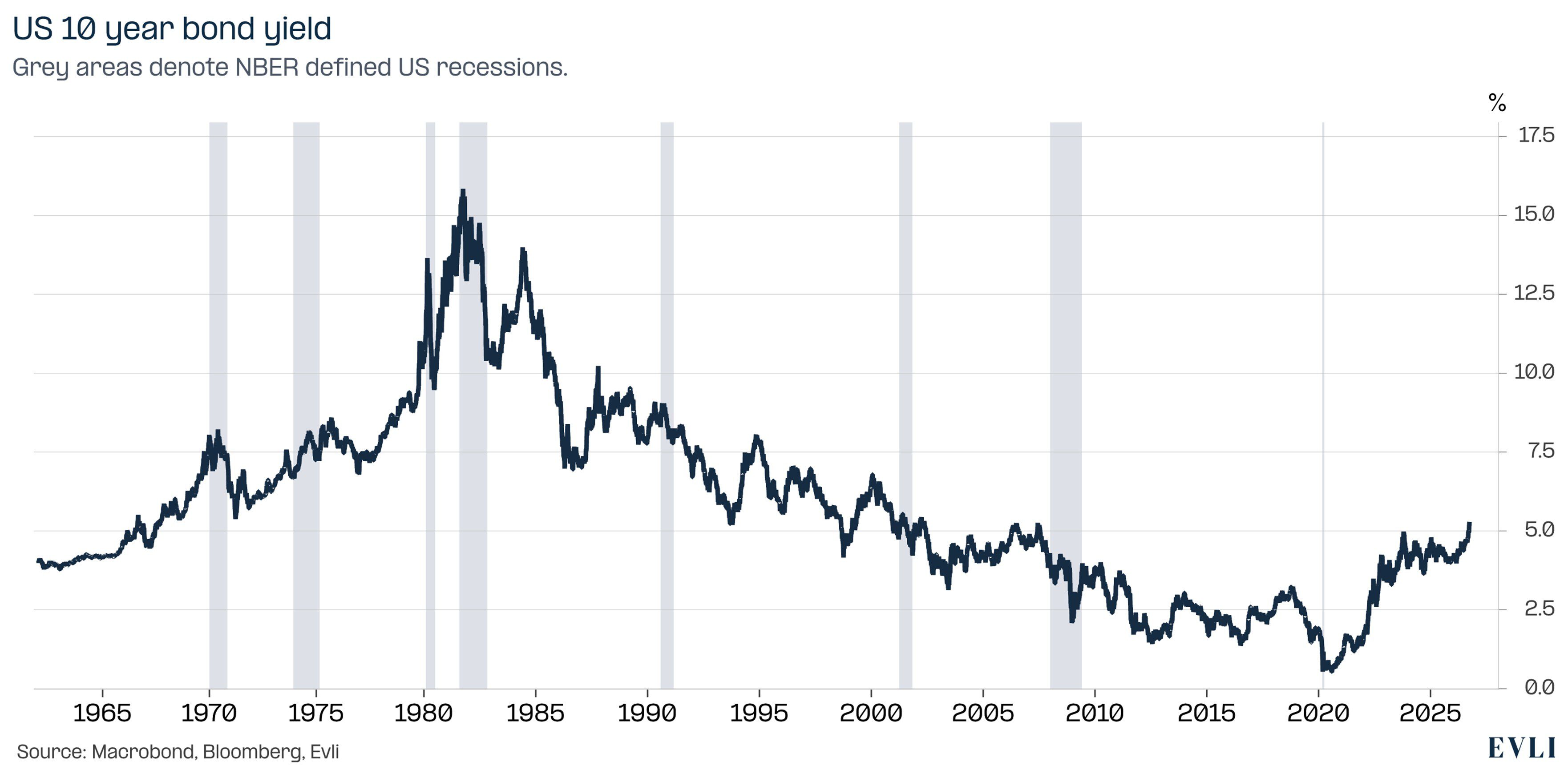
The current level of bond yields is not very high by historical standards. In the United States and in many European countries, yields were generally higher from the 1970s almost all the way to the financial crisis of 2007. The historical exception is rather the unusually low level of yields that prevailed following the financial crisis and came to an end after the pandemic.
After an extended period of easy money, we have, in other words, returned to more traditional levels of bond yields. Given the prospect of accelerating economic growth, elevated inflation, rising public debt and the artificial intelligence buildout, it is quite possible that bond yields will continue to climb.
Many fear that rising rates will undermine the equity bull market. Historically, interest rates and equities climb in unison when both are driven by economic growth. Rising bond yields are more of a problem for equities when the reason behind climbing bond yields is not economic growth but rapidly rising inflation, inflation expectations becoming unanchored, geopolitical shocks or other risk premia.
The rise in equity markets currently rests above all on rapid earnings growth. Earnings growth is driven by economic growth, but also by a historical artificial intelligence buildout. The buildout means record profits for semiconductors, energy, hyperscalers and industrial stocks. Rising bond yields are unlikely to halt these massive investments, at least not at current levels, given the profitability and competitive dynamics in the artificial intelligence ecosystem as defined by model companies, hyperscalers and semiconductor companies.
Economic growth and the AI buildout are, however, not the only reasons for rising bond yields. Inflation has been elevated, and the Iran war poses a risk in terms of energy markets driving further inflation. Government indebtedness and the need for capital from technology companies are also reasons driving higher yields.
Figure 1: Viewed in historical terms, the anomaly was the period of particularly low bond yields between 2007 and 2022.
The global economy is accelerating
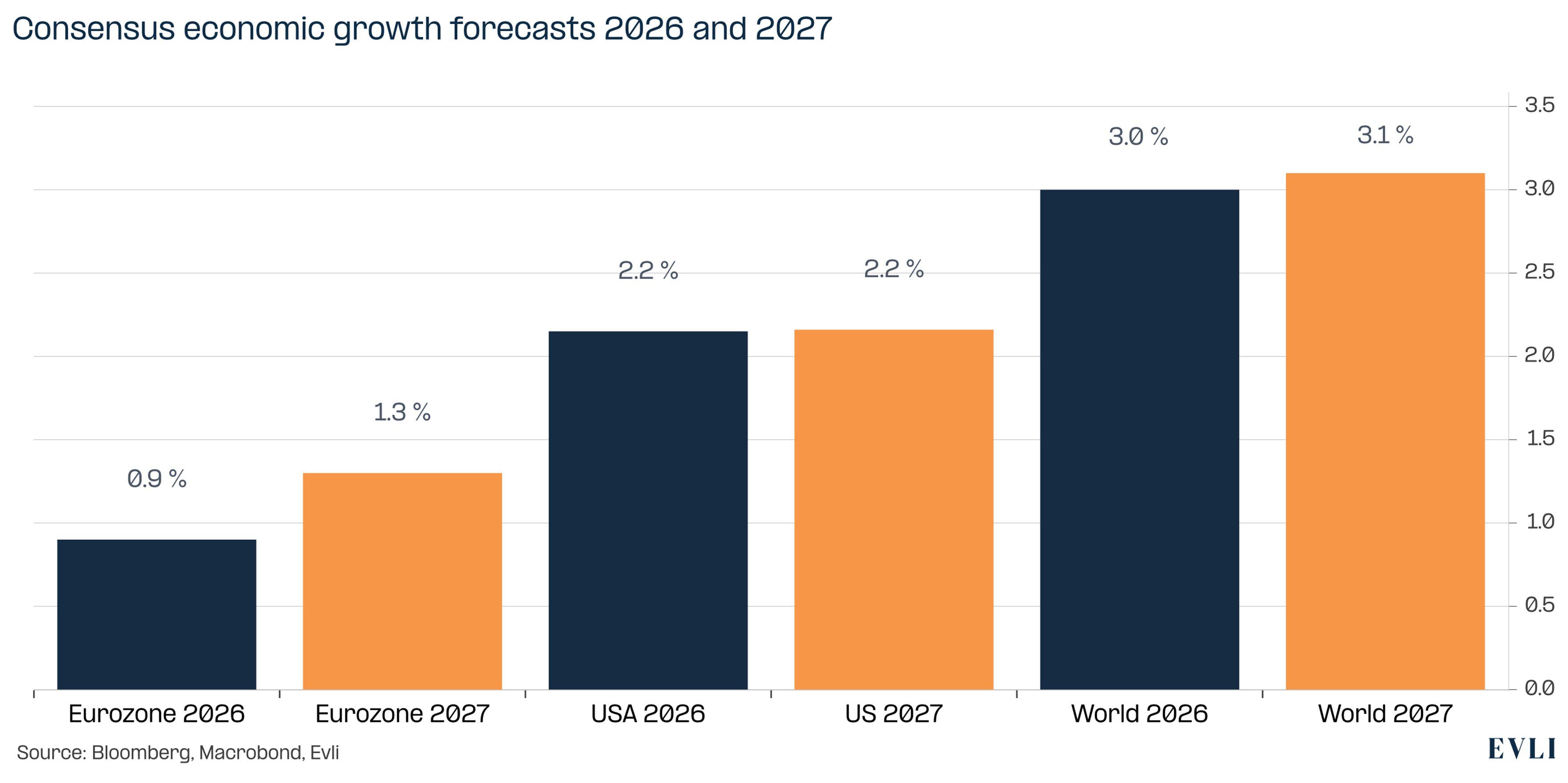
One central reason for the rise in rates is solid economic growth. According to Bloomberg, economists expect the United States economy to grow by over two percent both this year and next, while the euro area is expected to grow by 0.9 percent this year and 1.3 percent next year. Current data point to growth rates accelerating, and the US economy is now growing at an annualised rate above three percent, whilst previous estimates of growth have been revised up.
Most of the economic growth in the United States stems from private consumption, which is forecast to grow by two percent this year. Hence growth is not solely due to the AI buildout, as some have claimed. The artificial intelligence buildout is boosting growth as it accelerates investment. Current growth rates and in particular accelerating growth mean that bond yields may very well continue to climb.
Figure 2: The economy is forecast to keep growing at a solid pace across the globe.
The Iran war feeds inflation and lifts rates
The Iran war has resulted in elevated energy prices and has thus raised the inflation rate. Currently it seems the amount of oil flowing through the Strait of Hormuz is at the same level as before the war, as the US has been able to clear mines allowing for a channel hugging the coast of Oman, whilst countering Iranian strikes.
Nevertheless, the situation remains unresolved, and the risk of various negative scenarios is elevated. For instance, Iran may resort to striking other targets if it is unable to hinder traffic in the Strait of Hormuz. And even if oil flows through, refined products and natural gas do not, which is problematic for the global economy in terms of supply bottlenecks and inflation.
The resilience of the global oil market has been surprising. Oil analysts may have underestimated the elasticity of supply, China’s oil inventories and its ability to moderate consumption.
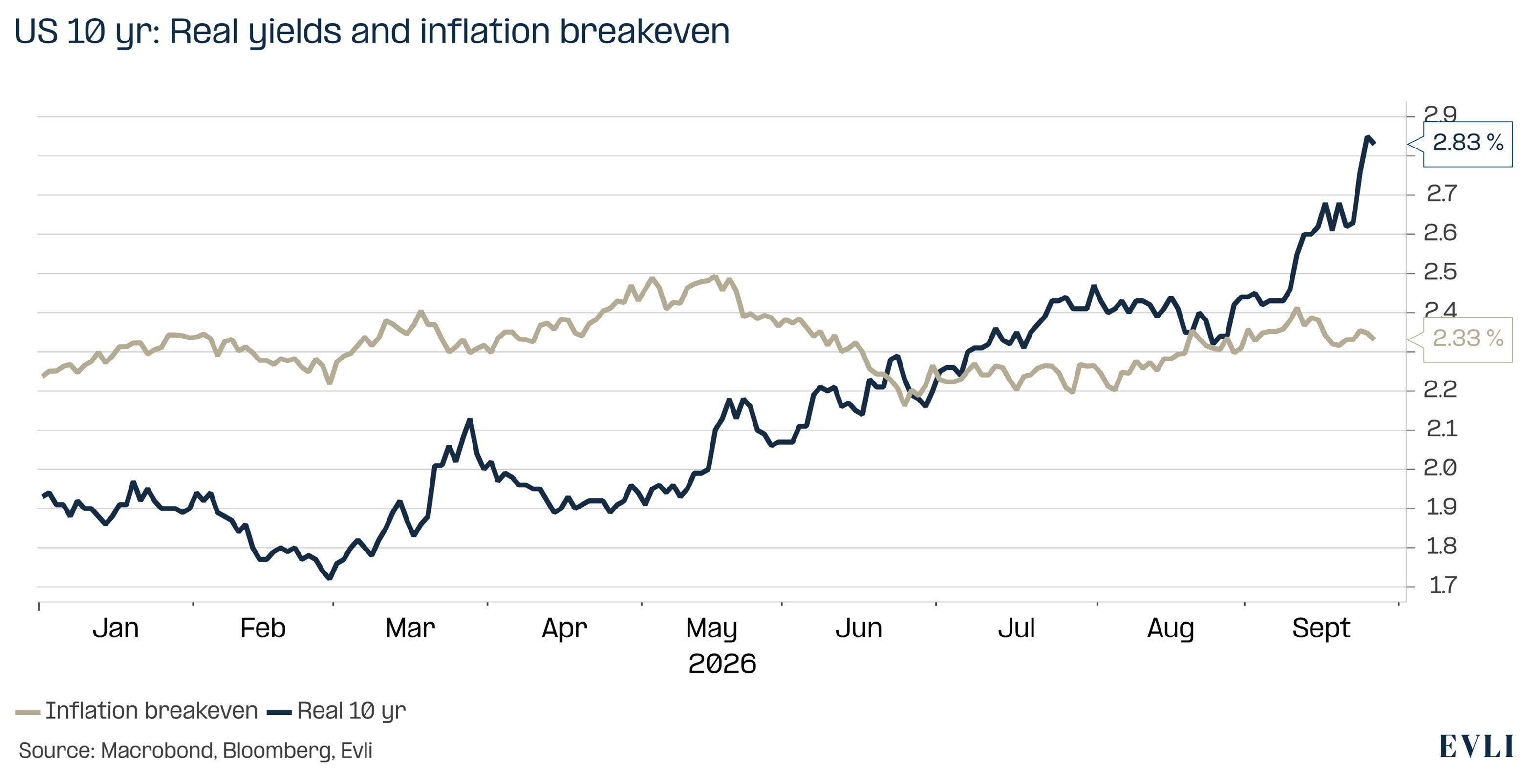
The rise in oil and natural gas prices is having an inflationary effect, which is raising bond yields. However, inflation expectations have not increased in the US, which suggests bond markets view the conflict as transitory. It is noteworthy that markets initially viewed the Covid crisis as a transitory inflation shock as well. The conflict may also raise bond yields because its continuation poses the possibility of unexpected outcomes; that is, Iran may raise yields because it raises risk premia.
Figure 3: Inflation expectations have not risen at all this year despite the Iran war.
Government debt keeps rising
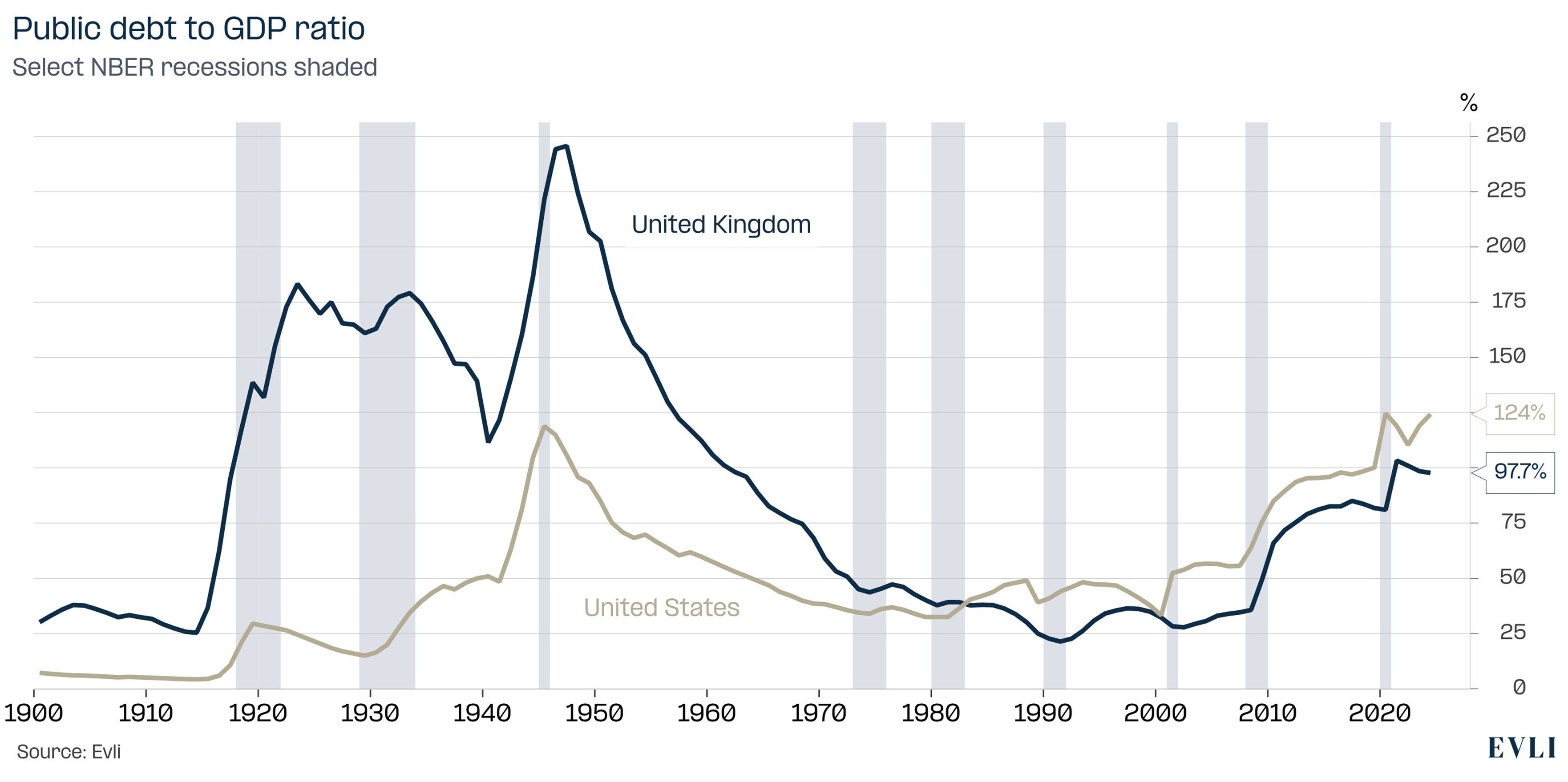
US public debt as a share of gross domestic product (GDP) stands at 126 percent, near its highest level in history. A high debt ratio is no exception among large economies, however. Public debt stands at 118 percent of GDP in France, 138 percent in Italy, 104 percent in the United Kingdom and 204 percent in Japan.
Debt levels are growing because populations are ageing and living ever longer. The change in the age structure leads to a steep increase in pension and health care expenditure.
Indebted governments compete in debt markets for finance, potentially raising yields. Markets may also demand a higher yield because the ability of governments to repay has weakened on the back of growing expenditure and a larger stock of debt.
The effect of government indebtedness on interest rates is hard to assess. Rising debt levels and ageing populations are hardly news to anyone, much less markets. Yet yields stayed very low from the financial crisis to the pandemic whilst debt levels kept climbing. It is too simplistic to attribute low bond yields to unconventional monetary policy, as bond yields were low in countries both engaging in and not engaging in unconventional monetary policy. Similarly, slow-growing, highly indebted small economies such as Belgium still pay lower yields than fast-growing large economies such as the US.
It may be that the most important factors determining the level of yields are economic growth and inflation, and that indebtedness only begins to be a major factor once debt has grown too large. Hence debt levels act in a nonlinear fashion after a critical threshold that varies depending on the country in question.
This raises the question of how much government debt is too much. Or at what level of debt bond markets begin to voice their concerns. Factors determining the sustainable level of debt include the rate of economic growth, the size of the economy, political institutions and geopolitics.
Governments can carry surprisingly large debt burdens. Public debt in Japan is around 200 percent of GDP. The United Kingdom's debt ratio rose to around 250 percent immediately after the Second World War. The current United States debt ratio of over 120 percent can therefore still grow significantly before we see the bond market protest.
Figure 4: The United States debt level is high, but still far from the peaks the United Kingdom has reached.
Deus ex machina artificiali
Artificial intelligence requires data centres, and building them demands a great deal of capital. Only a few years ago the talk was of secular stagnation and of a glut of savings sloshing about in search of somewhere to invest. Those pools of capital were eventually deployed in real estate and private assets. Secular stagnation was also a narrative of slow economic growth and a permanently depressed level of bond yields.
The central idea of the thesis was that moribund economic growth was the result of slow-growing, ageing populations and diminishing returns to technology. The great inventions had already been made, and the productivity gains delivered by newer innovations were increasingly meagre.
Much has changed in so short a time. The fifth or sixth coming of artificial intelligence is bearing fruit. Now there is a shortage of capital, and low bond yields are a historical anomaly rather than the new normal. The productivity benefits of artificial intelligence will only show up in the future, but the investment they require is already showing up as economic growth today.


