
With the Middle East conflict still ongoing, we travelled to London to meet with companies from the Middle East and North Africa region at the MENA conference in late September. Over four days we had discussions with a total of 26 companies from the Gulf region and Egypt. Our meetings covered consumer retail, food, healthcare, education, financials, payments, transport, and industrials. This blog summarizes our main takeaways on the region.
Shadow of the conflict
Since the conflict in the Middle East began in late February, shipping through the Strait of Hormuz has been badly disrupted and oil installations in parts of the Gulf have been hit. In its October outlook, the International Monetary Fund (IMF) expects GDP in the Middle East and Central Asia to fall by 0.3 percent in 2026. It is the only region in the world where GDP is expected to decline this year. The IMF forecasts GDP growth of 6.3 percent in 2027, assuming shipping through Hormuz gradually returns to normal from March.
Despite this backdrop, the companies we met were generally calmer than the headlines suggest.
How companies are adapting
The impact of the conflict has varied widely by sector, and most companies are adjusting their business models. Car rental companies have moved fleets away from the regions closest to the conflict. Manufacturers have rerouted supply chains, used air freight for urgent shipments and built larger inventory buffers. Service companies are redeploying staff across contracts rather than cutting headcount.
Domestic consumer businesses have held up best, as more residents stayed at home over the summer, and some retailers even reported higher store traffic than a year earlier. Industrial companies dependent on imported inputs have been hit harder by longer lead times and higher freight and insurance costs, although contracts with large state clients often allow these costs to be recovered with a delay.
Tourism, aviation and travel have been hit hardest, and in some cases the first half-year profits almost disappeared. Airport service providers, for example, cannot easily cut staff, as volatile air traffic means they must keep enough trained workers for peak days even though average volumes are lower. Recovery is under way: taxi trips and airport traffic have improved since the summer, and Dubai hotel occupancy was back at around 90 percent of last year’s level in August. Still, adaptation cannot fully replace lost demand, and for the most exposed sectors a return to pre-war growth is unlikely until the conflict is resolved.
Saudi Arabia: a structural consumer story
Beyond the short-term disruption, the longer-term drivers remain strong, especially in Saudi Arabia. Vision 2030, the government’s plan to diversify the economy away from oil through tourism, entertainment, healthcare and infrastructure, shapes almost every business we met.
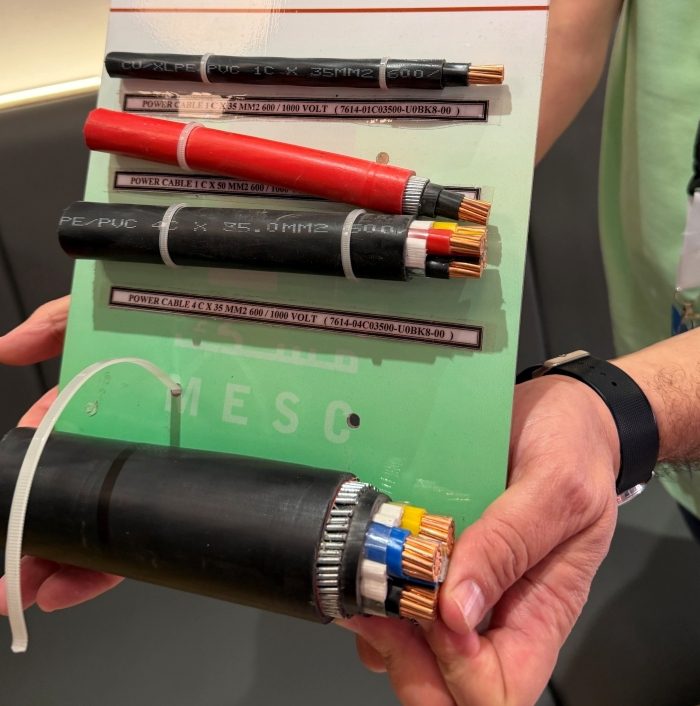
Specialized cable products from a regional leader.
The plan underpins the project pipeline for infrastructure and industrial companies, and projects are still moving forward despite the conflict. Those with fixed deadlines, such as Expo 2030 and the 2034 World Cup, are progressing, as are major airport expansions and oil and gas developments. Healthcare is expanding in the same way. The government relies on private operators to add hospital capacity, and hospital groups in Riyadh, Jeddah and other major cities continue to open new hospitals as demand still exceeds supply.
Together with a young, growing population, Vision 2030 is also shifting consumer spending towards entertainment, fitness, dining out and convenience. Many of these markets are still underpenetrated. Convenience retail is dominated by small independent shops, and gym penetration is only 6 to 7 percent, compared with more than 20 percent in developed markets. Consumers are price-conscious, however, so growth depends mainly on volume and new stores rather than price increases.
This growth also brings challenges. New hospitals typically need around 18 months to break even, and new stores and gyms one to two years to mature, so some companies are spacing out openings to protect margins. Government spending has become more selective, with some water and infrastructure tenders pushed back, and skilled labour such as nurses and teachers is a constraint.

Analyst Waltteri Vaittinen (centre) at a meeting with Middle East Specialized Cables.
Egypt: from macro recovery to consumer volume
Egypt is a different story, driven more by macro recovery than by structural change. Since the currency was floated in March 2024, the economy has become more resilient and has handled the war better than previous shocks. Dollars are now readily available for imports and dividends, and remittances increasingly flow through the banking system. The IMF expects GDP growth of around 5 percent per year for 2026 and 2027. Inflation has eased to around 14 percent, against a deposit rate of 19 percent, and banks expect rate cuts from 2027. High oil prices remain the main pressure, as they could lead to further fuel subsidy cuts and higher inflation.
This more stable backdrop is helping consumer companies, which have adapted to the weak pound. Food producers offer several price points and move customers to larger packs rather than relying only on price increases. They also lock in raw material prices through longer contracts, source more locally and build exports to cover their dollar needs. Companies told us the availability of dollars matters more than the exchange rate itself.
Demand remains strong, driven mainly by volume and population growth of around 2 million people a year. Several food producers are running near full capacity and are adding production lines and expanding exports, although some have slowed investment until interest rates fall.

Management team of e-finance Investment Group, with analysts Waltteri Vaittinen and Hanna Chau (right).
Share prices and risks
These operating trends are not always reflected in share prices. Many shares in the region have fallen sharply over the past year, even when companies are still growing. Companies pointed to the war, weak investor sentiment and thin trading in some mid-caps with low foreign ownership. Saudi Arabia opened its market to all foreign investors in February, although most large institutions already had access.
Looking ahead, the main risk is a further escalation of the conflict, which would delay the recovery in travel, trade and investment. High oil prices could push up inflation in Egypt, and more selective spending could slow parts of the Saudi project pipeline. In addition, higher US interest rates could reduce foreign appetite for Egyptian assets.
Heading home
The region offers a broad set of consumer-facing companies with growth drivers that differ clearly between markets. The war will weigh on Gulf GDP this year, but companies have adapted quickly, domestic demand has proved resilient and most expect a recovery in 2027. In the short term, though, the outlook for travel- and trade-linked sectors depends heavily on how the war develops. The two trends we will follow most closely are Egypt’s macro recovery and the structural shift in Saudi consumer spending.
The mood in the meetings was steadier than the headlines. Many management teams said they are running their businesses for the long term rather than reacting to the news cycle. That sounds like sensible advice if investing in the region is being considered.
References to individual companies are for illustrative purposes and do not constitute investment recommendations. The contents of this blog should not be considered as investment advice and should not be relied upon in making an investment decision. Before making an investment decision, you should consult the fund's legal documents, such as the fund rules, the key information document and the fund prospectus. The statutory documents and additional information of the funds are available on the product-specific pages and on www.evli.com/funds.
Alongside the authors, the analysts from the Evli Emerging and Frontier Markets Team also contributed to the writing of this blog.


